AI Magazine’s Artificial Intelligence Industry Report features exclusive insights from leaders at 8 companies across different industries who are leading the charge with emerging technologies and growth strategies. Cint provides commentary as the featured company representing the Restech industry.
AI is reshaping market research, not by eliminating human input, but by changing how insight is generated, scaled, and applied. As product cycles accelerate and decision-making becomes more continuous, traditional, study-based research models are increasingly under pressure to deliver faster answers without sacrificing quality or representativeness.
In response, the industry will be moving toward hybrid approaches which combine human-generated data with AI-driven analysis, synthetic data, and digital twin methodologies. These models aim to transform research from a static, point-in-time exercise into an always-on decision engine, where insights are continuously updated and embedded into business workflows rather than delivered as disposable data.
At the same time, the rise of AI introduces new risks. Models trained on insufficient, biased, or low-quality inputs can create false confidence, producing outputs that appear authoritative but lack real-world grounding. As a result, access to high-quality, diverse human data — alongside strong quality controls and governance — is becoming a critical differentiator. In this environment, AI is best understood as a reflection of human insight, not a replacement for it. High-quality human input is foundational in turning automation into real intelligence. When modeled using deep human data, AI can predict consumer behaviors, attitudes, and sentiment with high accuracy. The next phase of market research will be defined by platforms that can balance scale with control: capturing nuanced human signals efficiently, extending them responsibly through AI and synthetic techniques, and ensuring outputs remain credible, representative, and decision-ready. As organizations seek faster, more adaptive insight models, the ability to successfully integrate advanced technology with data assets into a single, coherent infrastructure will shape how research continues to play a role in decision making processes in the years ahead.
Key Trends:
From static studies to always-on insight models. Market research is moving away from one-off surveys toward continuous, real-time insight systems embedded in decision-making.
Hybrid human and AI approaches becoming standard. Human-generated data remains foundational, with AI and synthetic capabilities used to extend and scale insight responsibly.
Data quality and trust as core differentiators. As AI outputs proliferate, confidence in insights depends on strong quality controls, governance, and high-quality human input.
Reducing respondent burden without losing signal. Shorter, less cumbersome data collection methods will replace long surveys, improving engagement while preserving representativeness.
“AI has the power to fundamentally change how data is collected and how people engage in providing insights.”
Phil Ahad Managing Director, Data, Cint
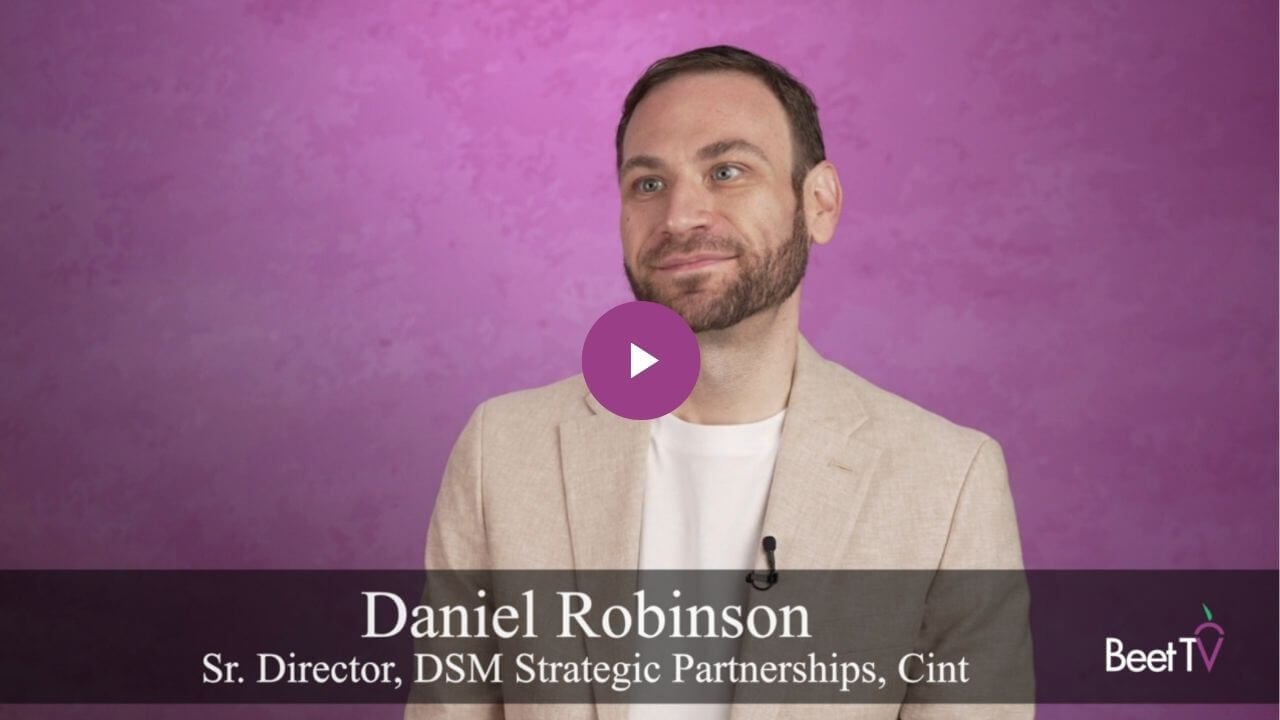
Phil Ahad, Managing Director, Data at Cint, describes the company’s mission as pushing the insights industry forward by connecting clients to the highest-quality data, enabling them to make confident decisions. Cint operates what it describes as the world’s largest market research exchange, giving clients access to global human respondents across both broad and niche audiences. That scale is paired with an advanced technology stack, quality controls, and fraud prevention, allowing Cint to apply consistent standards across its ecosystem. As Ahad explained, Cint’s differentiation is twofold: its access to people around the world, and the technology infrastructure that enables efficient, scalable data collection in an increasingly AI-driven research landscape.
Ahad sees AI having a dual impact on the insights industry: improving how data is collected, and accelerating the path from raw data to actionable insight. At the same time, faster product development cycles are increasing pressure on consumer insights teams to keep pace, often at lower cost. In this environment, AI must be integrated not just into research operations, but into the data creation process itself if the industry is to remain relevant in decision- making. As he put it, AI is creating “opportunities to collect data in a more seamless and efficient process,” while also changing “how quickly we can turn data into insights and answers for our clients.”
On synthetic data and digital twins, the emphasis is not replacement but amplification: Synthetic data and digital twin solutions amplify traditional research by enabling new ways to create and explore data that unlock deeper insights. These AI-driven approaches can extend high-quality human insight, reducing respondent burden without sacrificing representativeness. The central risk, Ahad argues, is false confidence, bypassing first-party research and over-trusting AI outputs without enough human grounding. As he put it, “the biggest misstep is putting expectations that AI can do everything,” making the real challenge determining the right balance between foundational human data and synthetic generation.
Looking ahead, the shift is toward always-on insight models, where data is no longer viewed as one-time use, but continuously informs decision-making. In that context, Ahad sees Cint’s role evolving beyond access, toward being a central data engine for an always on insights and prediction model that integrates first-party input, augments it with additional sources, and applies AI techniques to keep insights current and relevant.
Check out the full AI Magazine Artificial Intelligence Report
In an article for Greenbook, Marco Otero discusses why as AI and synthetic data scale research, human oversight remains essential to ensure data quality, trust, and credible decisions.
In an article for Greenbook, Cint’s Phil Ahad warns that brands are bypassing research due to speed, cost, and quality. Can the insights industry evolve fast enough?
AI Magazine’s Artificial Intelligence Industry Report features exclusive insights from leaders at 8 companies across different industries who are leading the charge with emerging technologies and growth strategies. Cint provides commentary as the featured company representing the Restech industry.
In an exclusive interview, Al Gaviria, Account Executive at Cint, analyzes the key moment in advertising measurement in Latin America: CTV, attention, brand lift, and why the market demands more than just impressions.
Cint’s Laura Manning highlights mid-flight decisioning as the new standard for campaign measurement in 2026. By using tighter feedback loops and reliable signals to optimize campaigns in real-time, brands can finally tie early exposure to long-term loyalty.
Finding the right balance between growth and high standards is an ongoing negotiation that requires curiosity, humility and industry collaboration, says Katy Mallios in an article for Research Live.
Cint selects Rep Data’s Research Defender as an ongoing quality technology partner, while Rep Data expands its sample partnership with Cint to strengthen global reach and collaboration
Proactive, cross-functional fraud prevention is essential in today’s research ecosystem. The right people, tools and culture can prevent wasted budgets, reputational damage and flawed business decisions.
Cint Launches “Luci,” an AI Study Companion for Real-Time Brand Lift Insights: New AI-powered feature in Lucid Measurement makes campaign optimization faster, smarter, and more intuitive
James Snyder, Vice President of Trust and Safety at Cint, shares his expert perspective on the quiet blurring of the line between real and synthetic input in a recent article. Originally published in Research Live, the piece features Snyder’s argument that this change challenges our understanding of what data quality means.
Kantar has strengthened its partnership with Cint, tapping into the new Cint Exchange to gain unprecedented access to a vast network of global insights. This pivotal collaboration empowers Kantar to achieve a more profound understanding of people everywhere, ensuring they can deliver faster, more scalable, and highly confident analytics to their clients.
In an article for Greenbook, Lindsay Fordham discusses how AI is redefining market research—ushering in an intelligence era focused on high-quality insights, scalable rigor, and trusted data-driven decisions.
As industries across marketing, media, product development and beyond shift toward faster, more iterative workflows, Cint CEO Patrick Comer unpacks the future of Restech.
Newly 60 Million USD equivalent investment supports new operating model, accelerates platform unification, and bolsters U.S. and global market ambitions
Cint has become certified as a Most Loved Workplace® backed by the research and analysis of Best Practice Institute (BPI) and named in the top 50 of Newsweek’s 2025 Global Top 100 Most Loved Workplaces® list.
Cint polls consumer confidence and releases Upfronts Report on TV viewership habits to help advertisers assess budgets and campaign planning during Upfronts season
Cint, the leader in research technology (Restech), is excited to announce a reimagined brand and the latest release of its new research platform, the Cint Exchange.
Cint, the global leader in market research technology (Restech), is pleased to announce two key promotions from its Global Leadership Team (GLT) into the C-Suite, further solidifying the company’s commitment to customer experience and its three-year strategy.
Cint, a pioneer in research technology and digital insights, today released findings from ‘The State of Data Collaboration: A Global Perspective’, a joint report on marketer and agency challenges in association with data collaboration innovator, Lotame.
To support privacy-conscious ad exposure and diversify available identity solutions for brand-lift measurement, Cint is excited to enable Unified ID 2.0 (UID2) for Lucid Measurement on UID2-supported demand-side platforms like The Trade Desk.
The partnership allows Conjointly and Cint to directly connect via a server-to-server integration, effectively eliminating “ghost completes” – a form of fraudulent survey responses.
Cint scoops second prize for its achievements in data quality with ground-breaking Forsta partnership on a secure server-to-server (S2S) API integration.
Cint and Advertising Week partnered to explore the impact of deepfakes, AI and social media on upcoming elections globally. The findings – as revealed live at Advertising Week EU – were covered by Stylist.
GapFish GmbH, a Berlin-based market research company that was acquired by the Cint Group in 2021 will in early April 2024 merge with Cint Deutschland GmbH.
Cint and JTB Tourism Research & Consulting Co. jointly conducted a survey on changes in inbound traveler behavior and attitudes toward sustainable tourism
Lucid Impact Measurement by Cint is poised to change the game in an era where a patchwork of brand lift studies from multiple social platforms with differing, non-comparable methodologies is needed to gauge campaign effectiveness.
Lucid, a Cint Group Company is now an Amazon Ads verified partner. Advertisers on the Amazon DSP can use Lucid Impact Measurement to automatically measure brand lift from their campaigns.
Vanessa brings more than 20 years of experience to the Cint team, leading and collaborating across local and global companies to develop and scale in measurement, data, and technology centric solutions. In a time where every ad dollar counts and campaign measurement is critical, Vanessa’s expertise aids in accelerating growth and opportunities for brands.
Our new partnership with StatSocial means that insights professionals can tap into the power of both our platforms to target niche market research audiences, quickly and at scale.