
Read the full article – as originally published in The Media Leader.
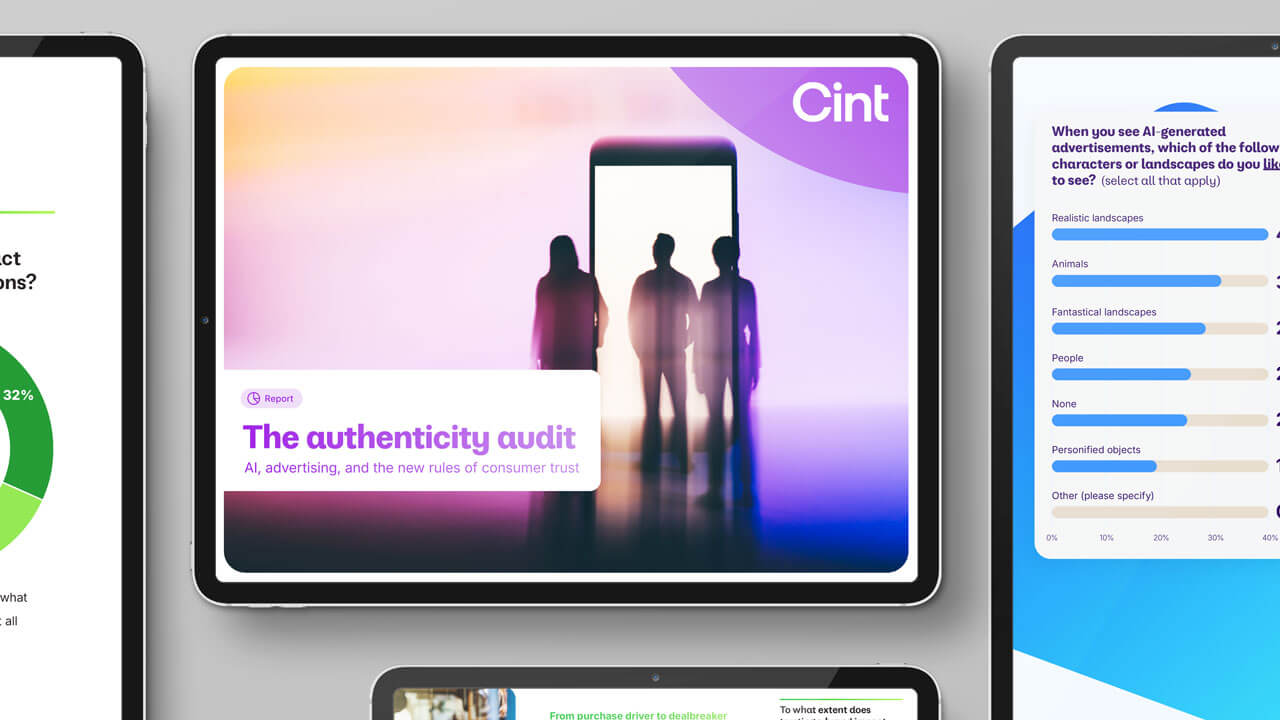
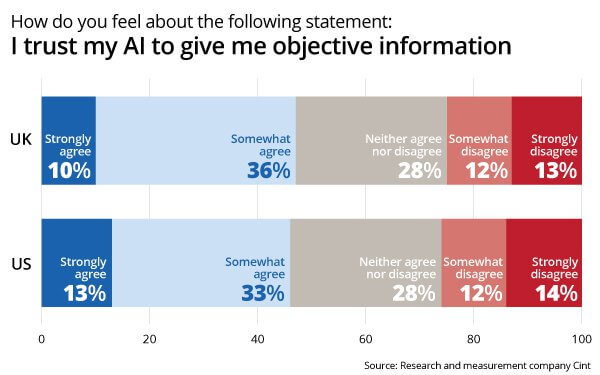
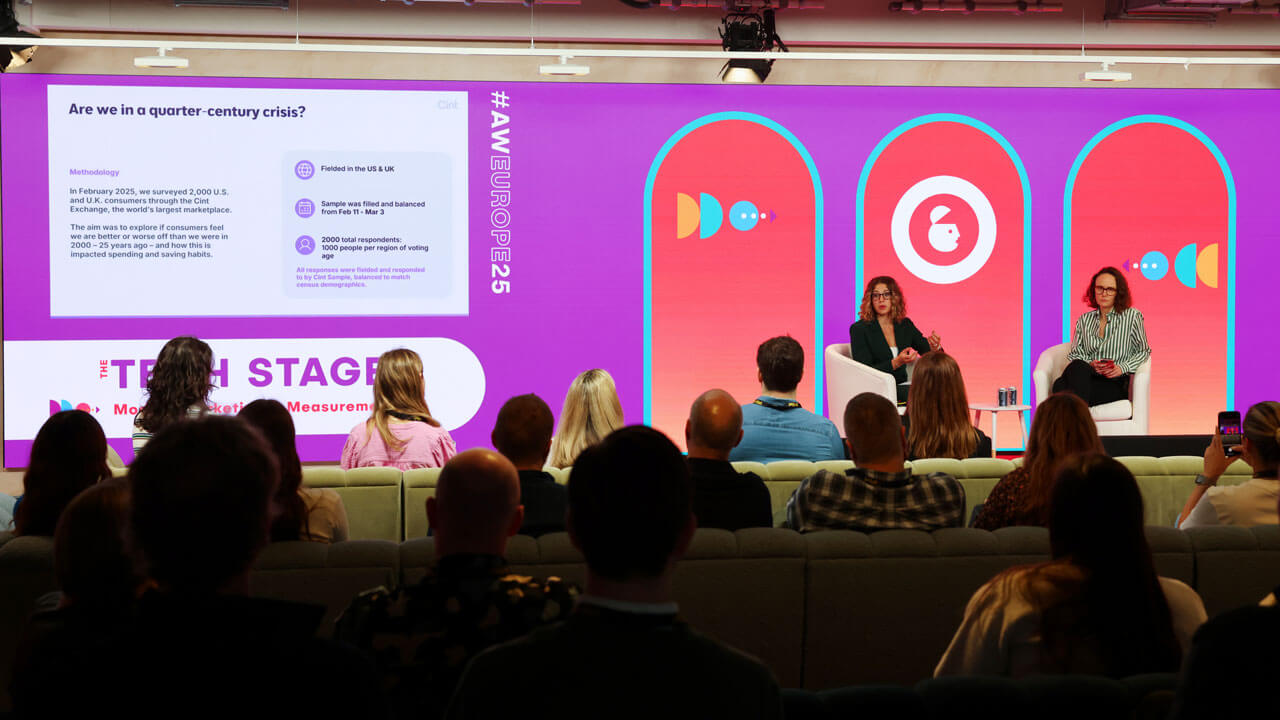
AI has woven itself into our everyday lives, and for businesses, the race to keep pace has become relentless, evoking a sense of being left behind if you aren’t engaging with AI. Ingram, however, draws findings from a latest AI report conducted on the Cint Exchange that uncovers a striking contradiction in the UK’s attitude to AI.
Below are three of her key findings:
AI for me, not for brands
While nearly three-quarters of UK consumers now use AI personally, they are far more uncomfortable when brands and institutions use it – particularly in high-trust sectors like healthcare and government. The distinction comes down to control: when individuals use AI, they own the outcome; when brands use it, that accountability disappears.
The emergence of a human premium
More than half of respondents said they’d rather wait five days for a human-produced report than receive a faster, less accurate AI-generated one. This signals a quiet recalibration that efficiency is no longer the priority.
The transparency paradox
While almost two-thirds of people believe companies should disclose AI use in content creation, over a third say that disclosure makes them view the brand more negatively – leaving marketers caught between honesty and reputational risk. A tension that will sharpen when the EU AI Act requires mandatory disclosure from August this year.
To conclude, Ingram states that ‘human-made’ may become a powerful brand differentiator, and that the smartest brands won’t simply ask how to automate more, but where AI genuinely adds value versus where it quietly erodes trust.

Check out the original article on The Media Leader