
Summary
The relationship between consumers and advertising is changing fast as artificial intelligence takes over creative asset generation and audience targeting. This study explores how everyday people perceive AI-driven advertising, uncovering what builds brand trust and what triggers consumer fatigue.
Key Takeaways:
- Perception of Personalization: Examines how audiences actually feel about highly hyper-targeted, AI-generated ad placements.
- The Authenticity Gap: Highlights consumer attitudes toward deepfakes, synthetic messaging, and AI-authored creative content.
- Strategic Implications: Provides essential guardrails for brands looking to leverage programmatic AI tools without alienating their core customer base.
What impact is AI having on ads?
In the second part of our series of features that explore the impact that AI has on our lives, we look closer at what it means for advertisers and brands.
The research below was presented on stage in partnership with Advertising Week Europe earlier in 2026.
To remind yourself of what our recent study into the topic told us about AI and daily life, head here, and read on to discover more about what AI means for advertisers and consumers alike.
Demographics and methodology
Who we surveyed and how we did it
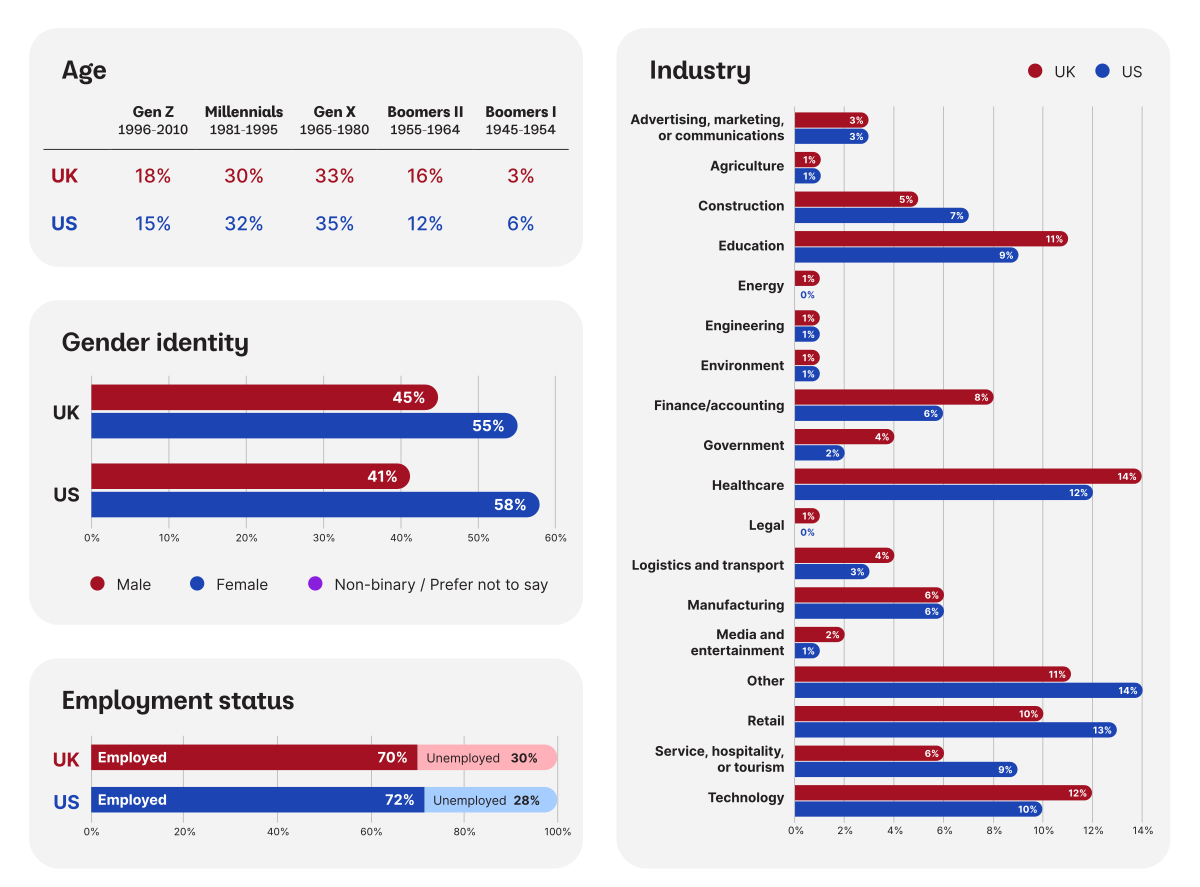
This report is underpinned by extensive research conducted through the Cint Exchange, the world’s largest marketplace for research, and was conducted in association with Advertising Week Europe.
In late January and early February 2026, around 1000 respondents in both the United Kingdom and the United States took part in our study into AI.
A demographic overview is at below.
Can AI and ads work together?
Exploring consumer sentiment toward automated advertising
There’s no denying that AI has reshaped the media measurement industry. In today’s ever-evolving media landscape, the ability to measure and optimize campaigns in real time is no longer a luxury — it’s a necessity. Traditional measurement methods, while reliable in many ways, often fall short when it comes to speed, flexibility, and cost-efficiency. This lag can result in missed opportunities and reduced campaign performance.
How, though, does the average person feel about the use of AI in ads? And what does this mean for everyone involved in the production, distribution, and measurement of them?

The 101 on AI ads
In recent years viewers have not just seen ads for AI companies — 2026’s Super Bowl slots were dominated by them — but campaigns that make use of generative AI tools and techniques.
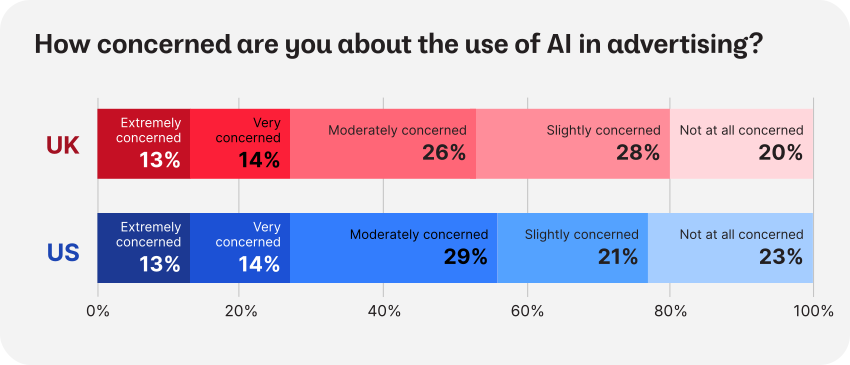
In both countries polled, 27% of respondents are either extremely or very concerned about the use of AI in advertising, and a further 26% of Brits and 29% of Americans noted a moderate level of concern when it comes to AI-assisted advertising campaigns. Just one fifth of UK respondents and around a quarter of those in the US indicate no concern at all around this topic.
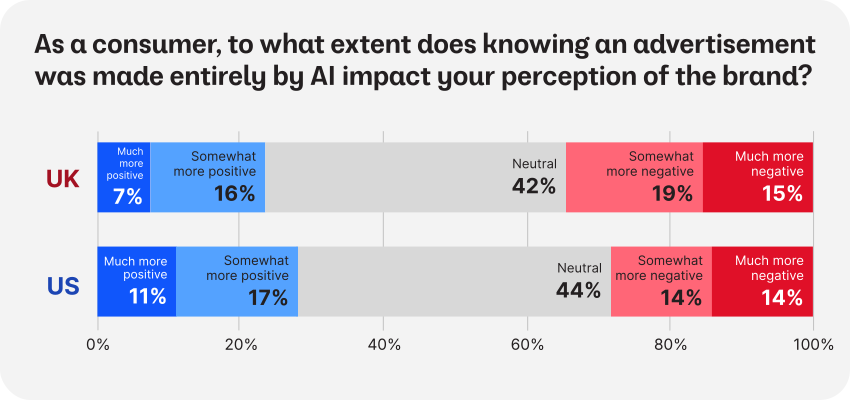
On brand perception, the verdict is unexpectedly consistent: knowing an ad is AI-made doesn’t significantly change how people feel about the brand behind it.
Among UK respondents, 7% say AI-made ads would give them a much more positive perception of a brand, while 15% say the opposite. The majority, however, remain unmoved: 42% took a neutral stance. US results tell a near-identical story: 11% more positive, 14% more negative, and 44% unaffected.
Our survey also asked respondents to consider the question of AI use in advertising from a legislative perspective.
While regulations differ from state to state across the US, in the UK strict rules abound when it comes to online content creators explicitly disclosing when a post is an advert. With no equivalent framework yet in place for AI usage, we wanted to explore how respondents feel about the idea of extending that duty of disclosure to AI.
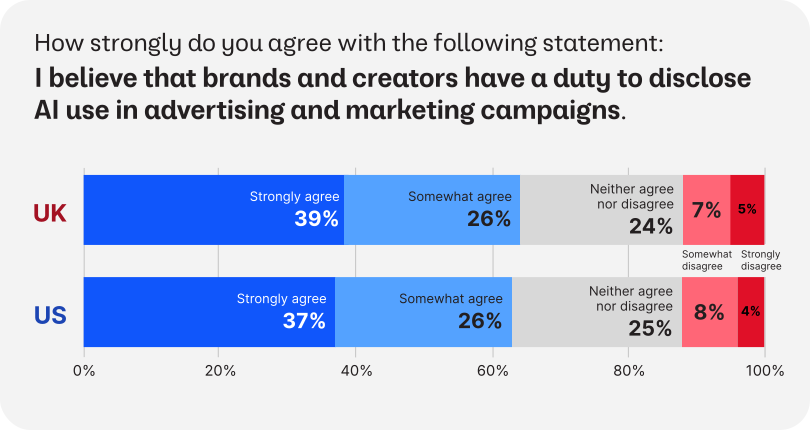
As with brand perception shifts, sentiment was similarly aligned across both survey groups when it came to the possibility of advertisers having to disclose their use of AI across advertising and marketing campaigns.
In the UK, 39% of respondents strongly agree that brands and creators have a duty to disclose AI use in advertising and marketing campaigns, with a further 26% somewhat agreeing, and just 12% push back on this view. US respondents are almost identical in their thinking: 37% strongly agree and 26% somewhat agree, with only 12% in disagreement.
Brands beware!
What is in an ad?
One of the arguably stranger things our research turned up was both respondent groups evidencing a desire to see AI used for the purposes of realism.
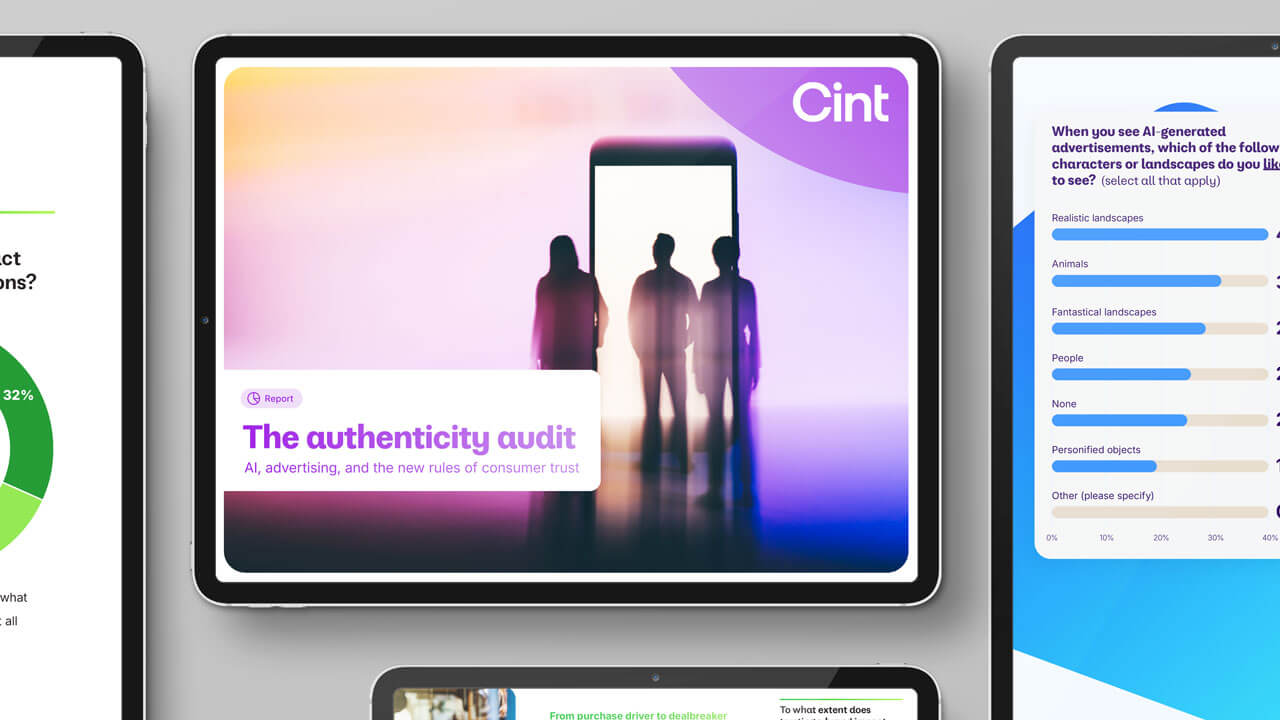
Respondents were asked the following question: When you see AI-created advertising, which of the following characters or landscapes do you like to see?
Realistic landscapes are the most popular choice among both UK (38%) and US (40%) respondents, which might be good news for project managers who may no longer need to allocate resources for location shoots for forthcoming ads.
People and animals ranked equally in both markets, with around a quarter to a third of respondents selecting each.
Notably, around a quarter of respondents in both the UK (28%) and US (25%) opted none of the above, which may reflect a broader indifference to or discomfort with AI-created advertising altogether.
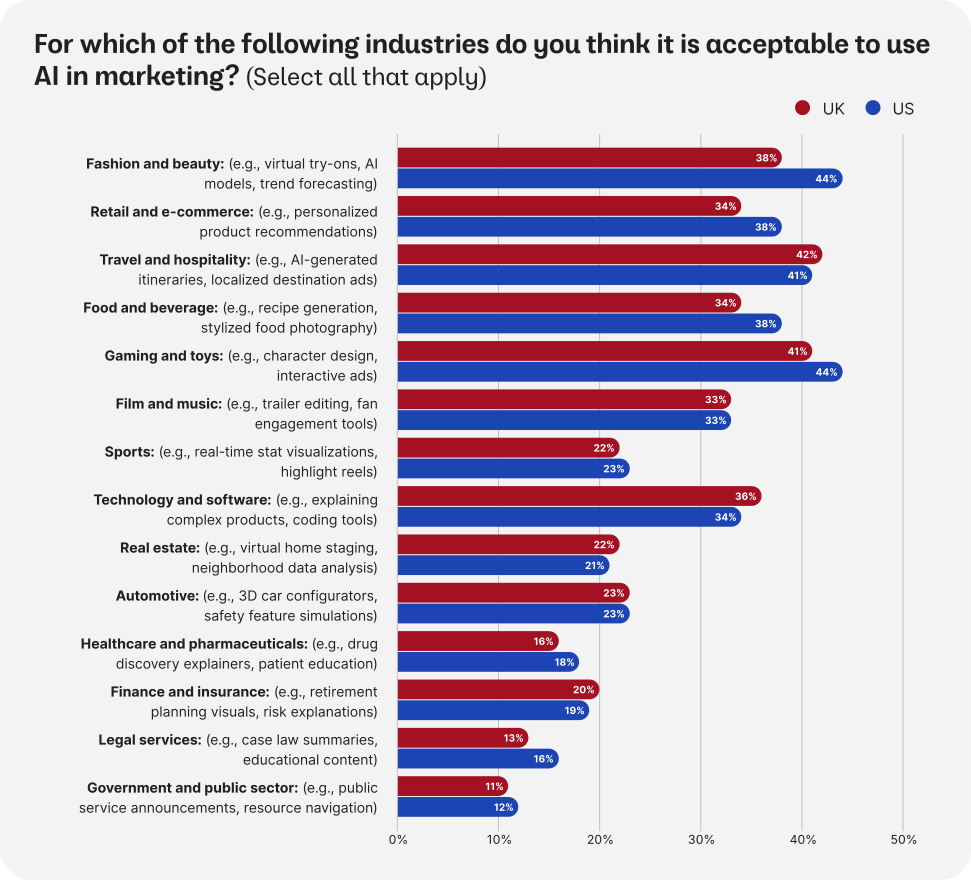
Attitudes toward AI in marketing vary considerably when it comes to analyzing where it is and isn’t acceptable to use them by the industry/sector in question. Despite this, the data patterns across the UK and US respondent groups remain consistent.
Travel and hospitality emerges as the most accepted use case in the UK (42%), while fashion and beauty, and gaming and toys lead the way in the US (both at 44%).
Government and public sector ads were the least appealing use case for both audiences, followed by legal services and healthcare and pharmaceuticals.
Read more in the series
Download full report