
Summary
From smart home algorithms to personal routine automation, artificial intelligence is quietly reshaping how we live outside of the office. This report dives into consumer sentiment surrounding the everyday integration of AI, tracking whether people view it as an helpful ally or an unwanted interloper.
Key Takeaways:
- The Adaptation Curve: Analyzes how consumers are reacting to AI’s rapid infiltration into their private spaces and personal tech habits.
- Trust vs. Utility: Explores the fine line between user convenience and data privacy concerns in day-to-day life.
- Consumer Outlook: Reveals data-backed insights on what the general public expects from the next generation of lifestyle-oriented AI tech.
How is AI reshaping our daily lives?
Future historians may well conclude that the 2020s were defined by the rapid rise of artificial intelligence (AI).
Humans have been learning to co-exist with various forms of AI for the past 70 or so years. Different types of AI, and attendant use cases, have been theorized and brought into being since pioneering British computer scientist Sir Alan Turing first considered the topic in the early 1950s.
Our new series of features focus on generative AI and the impact that ever-increasing rates of AI adoption into our lives — whether at work or at play — are having on the average consumer.
Generative AI is the term applied to deep-learning models that have the capacity to generate things like text and images based on the extensive data models that they have been trained on. Examples include Google Gemini and Microsoft’s Copilot.
While the series explores how AI implementation is changing our collective attitude towards work, and the likelihood of respondents to rely on AI assistance for advice on everything from financial planning to booking vacations, there is a particular focus on the use of generative AI tools in advertising.
The question, then, is a big one: is AI our friend or foe?
In the first blog in this series, we look at how frequently people are using AI, what they’re using it for, and crucially, how trustworthy they find it.
Demographics and methodology
Who we surveyed and how we did it
This report is underpinned by extensive research conducted through the Cint Exchange, the world’s largest marketplace for research, and was conducted in association with Advertising Week Europe.
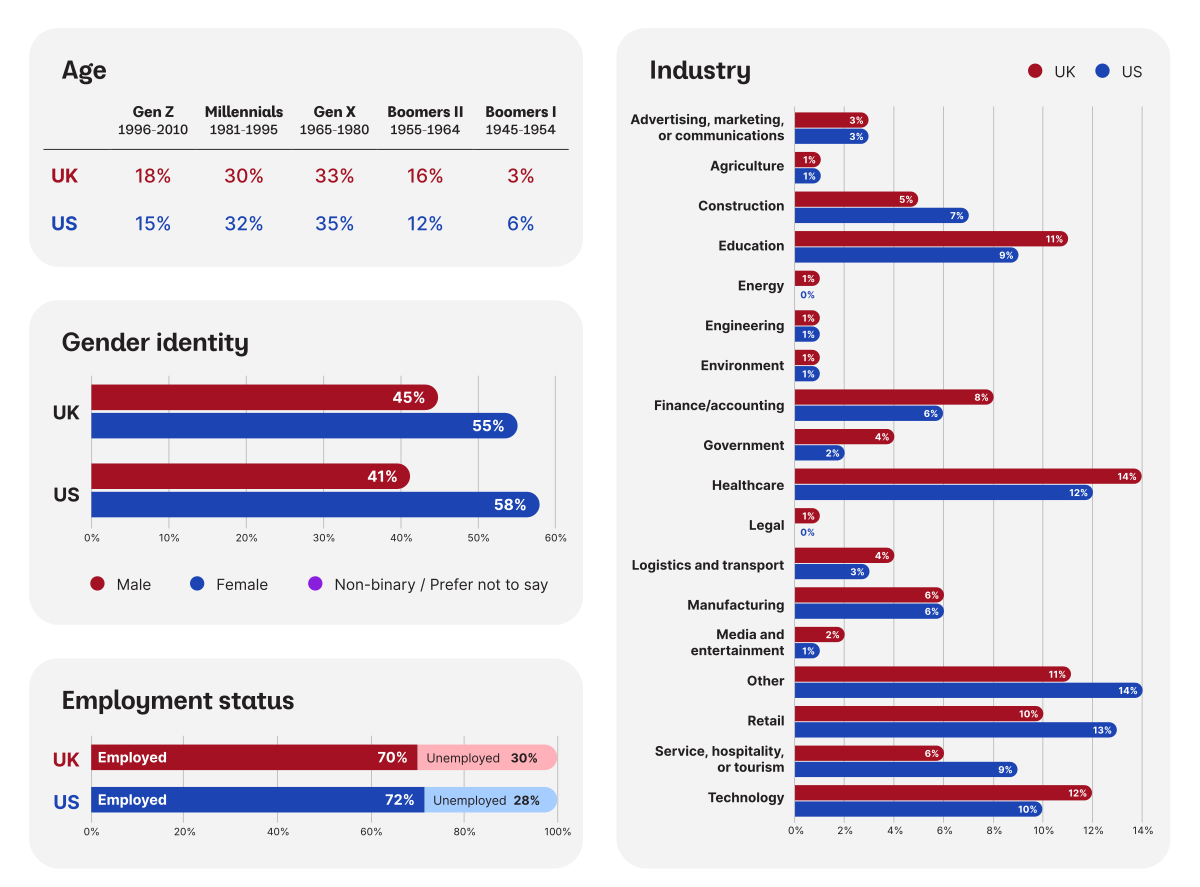
In late January and early February 2026, around 1000 respondents in both the United Kingdom and the United States took part in our study into AI.
A demographic overview is at below.
What impact is AI having on our lives?
Boosters, doomers, and in-betweeners
The encroachment of AI in our lives is a divisive issue.
For some, generative AI products like ChatGPT and MidJourney are transformative, time-saving, productivity-boosting digital power tools that function as virtual life advisors.
For others, those same services are understood as spreaders of misinformation that are prone to hallucinations, ultimately engendering a generalized sense of distrust in what they read and what they watch.
Our survey began with a general analysis of whether or not respondents really are incorporating AI into their daily routines.

Daily usage
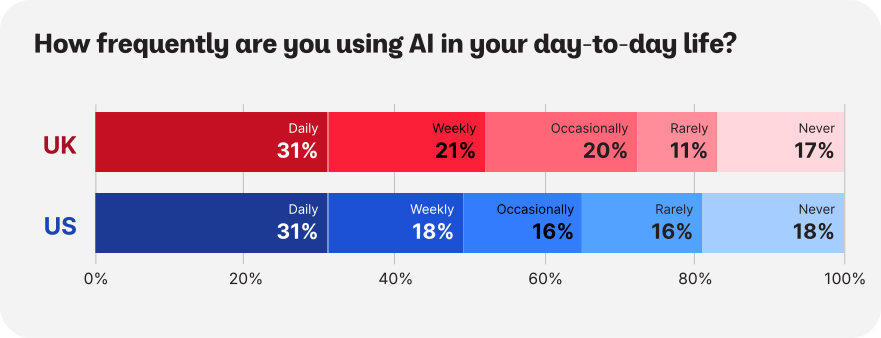
Respondents were initially asked a simple question as part of the wider survey: How frequently are you using AI in your day-to-day life?
Our results showed similar patterns across both the UK and the US. Nearly a third of both sample groups (31%) stated that using AI is a daily occurrence, while around a fifth (17% in the UK and 18% in the US) of survey respondents asserted that they never find themselves using any kind of AI in their daily lives.
What are people actually using AI for?
It was essential that our study explored not just if people really are weaving AI into their daily lives, but what they’re actually using it for.
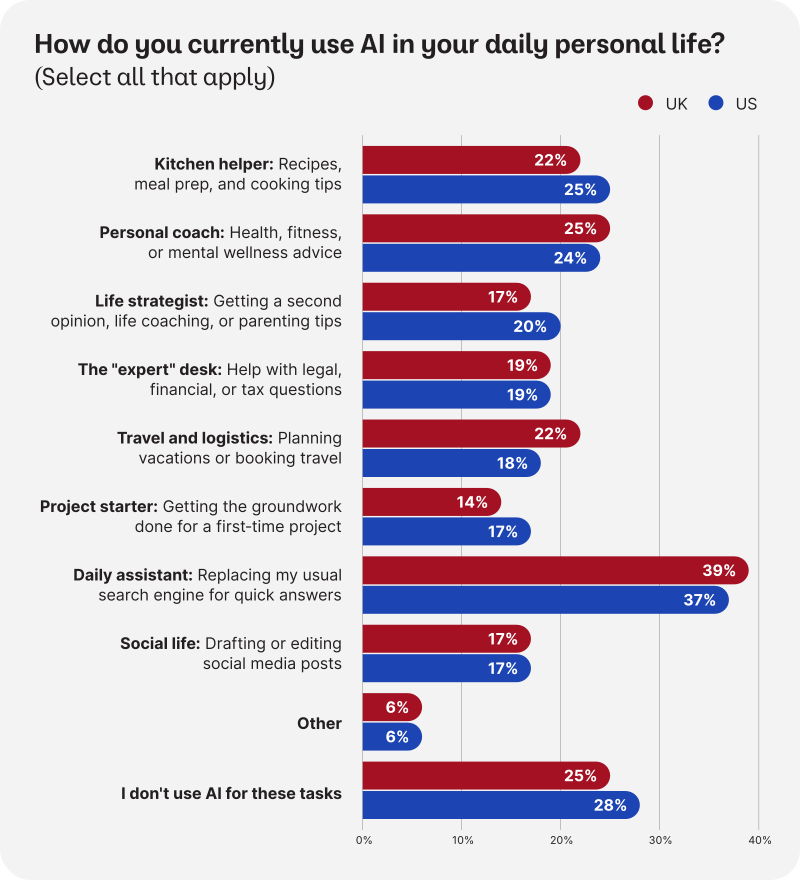
For both cohorts, AI products are primarily functioning as daily assistants. Rather than relying on traditional search engines for answers, 39% of Brits and 37% of US respondents are popping prompts into their tool of choice.
The shift from Google to AI as a primary means of using the internet as a search method is one of the bigger changes to how the internet itself functions we’ve seen in decades. A recent study by McKinsey found that “by 2028, $750 billion in US revenue will funnel through AI-powered search.”
Our results also demonstrate that the likes of Claude and Copilot are proving useful when it comes to needing a helping hand in the kitchen. Around a quarter of those surveyed deploy AI for recipes, meal prep ideas, and general cooking tips.
We also saw that AI services are being utilized to assist respondents with everything from parenting tips to drafting social media posts via digital life coaching and vacation planning.
Decision-making
It’s one thing to ask an AI chatbot for advice and another to actually entrust it with managing things in your life.
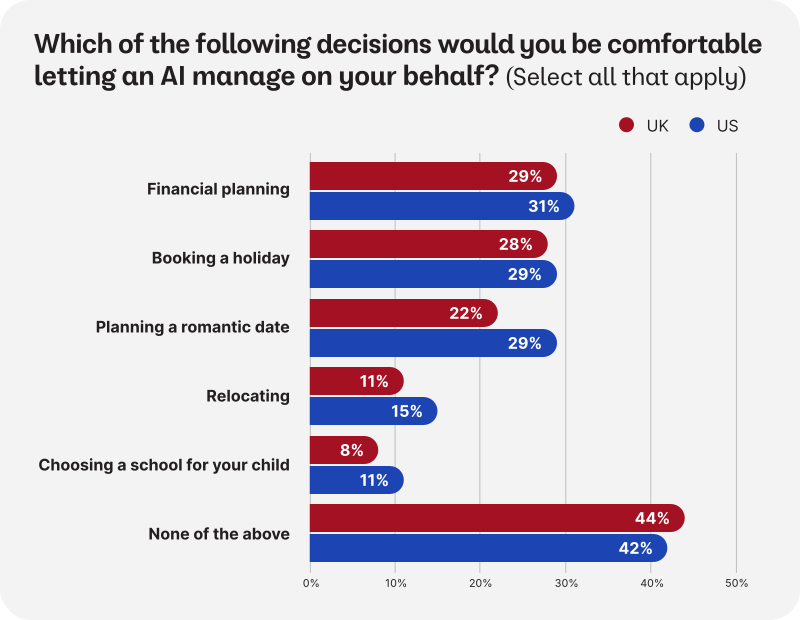
UK respondents are more likely to let an AI product oversee their personal financial planning than have the LLM plan a romantic date. Leaving bigger life decisions to AI — like choosing a school for a child, or relocating — did not prove to be popular.
Similar results were found in the US. Stateside respondents are happy to delegate financial planning and vacation booking to AI, but prefer to personally manage bigger life decisions like education and relocation.
The trust factor
As anyone who’s seen Stanley Kubrick’s seminal 2001: A Space Odyssey knows, trusting artificial intelligence isn’t always the smartest idea.
While they might not send you hurtling into the fathomless black deep of outer space, AI services like ChatGPT can hallucinate facts, while increasingly realistic video tools force us to question the very reality of what’s on our screens.
Trust, then, is a hot topic in the realm of AI. With that in mind, respondents were asked to rate the trustworthiness and objectivity of generative AI outputs.
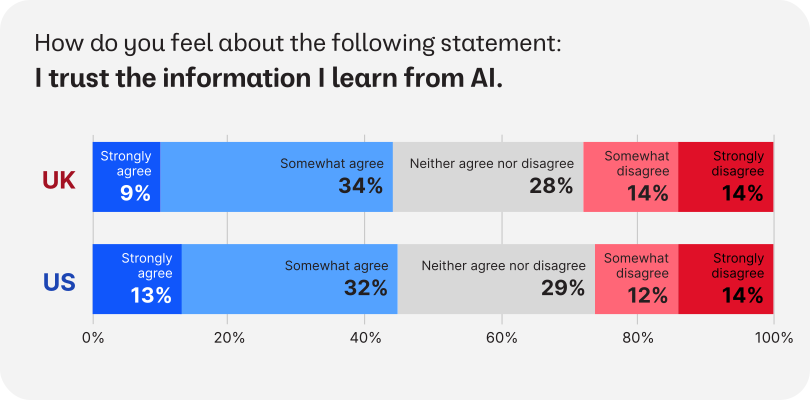
When it comes to a general take on trustworthiness, respondents in the United States are slightly more trusting of the information they’re provided by LLMs and other generative AI products than their UK counterparts.
However, there are sizable cohorts on both sides of the Atlantic who feel differently. 28% of Brits and 26% of US respondents either somewhat or strongly disagree with the statement put in front of them in the survey.
Generally speaking, ‘objectivity’ is a thorny concept but this isn’t a philosophy paper so for now we’ll just stick to how it applies to AI usage. Here, we’re thinking specifically about unbiased responses to human prompts, questions, or queries.
If you were to ask Google Gemini “When did Henri Matisse die?” or “What is the population of Scarsdale, New York, as per the last US census?” you’d expect to get the accurate, unbiased, and qualified answers that you might if you consulted an encyclopedia or the United States Census Bureau’s website.
Given that LLMs provide responses based on content they’ve retrieved and sequenced from across the internet, it should be expected that a certain level of bias or subjectivity may creep into the results they spit out at users.
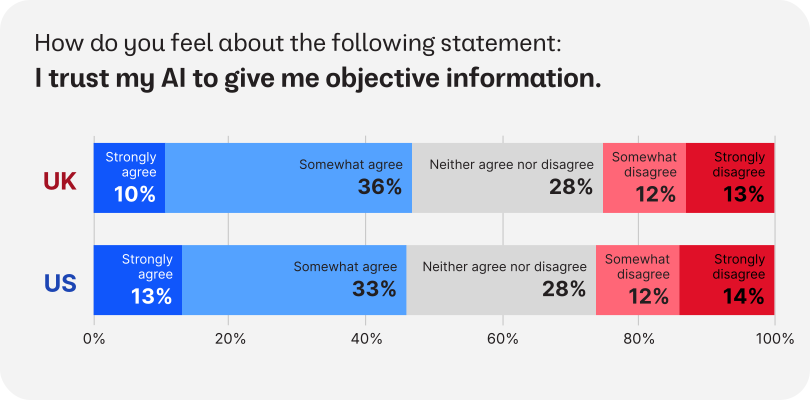
Interestingly, many of our respondents are of the opinion that AI services are providing them with objective information. Just under half (46%) of both sets of survey takers somewhat or strongly agree with that proposition, versus the 25% of Brits and 26% of Americans who took the opposite tack.
A personal touch?
Around the world, hundreds of millions of people are interfacing with generative AI tools every day. Some are occasionally using LLMs in lieu of a Google search, while others, as our survey results demonstrate, are ceding huge amounts of agency and autonomy to them.
With enough time, patience, and interest, a user can ever so slightly bend an LLM to their will. The tool can be told to be friendlier or firmer, pliant or punishing.
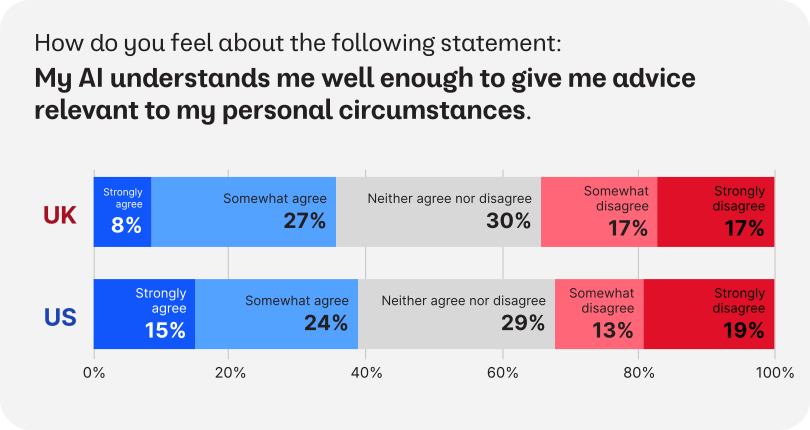
We wanted to know how personalized respondents felt about the allegedly personalized nature of generative AI solutions.
We saw similar sentiments shared between UK and US respondents. Nearly half of UK respondents (35%) strongly or somewhat agree with the assertion that their AI (i.e. the LLM or other generative product they spend the most time with) understands them well enough to give advice that feels authentically relevant to their specific personal circumstances. This figure rises slightly to 39% for US respondents.
At the other end of the spectrum, a quarter of UK respondents and nearly a third of their US counterparts (32%) somewhat or strongly disagree with the statement.
Read more in the series
Download full report