
Contents
Summary
From automated internal communication workflows to predictive data analytics, artificial intelligence is fundamentally restructuring professional environments. This installment examines real-world sentiment from employees and leaders regarding the growing reliance on digital corporate tools.
Key Takeaways:
- Efficiency vs. Displacement: Balances the undeniable productivity gains of AI automation against widespread workforce anxiety regarding job security.
- The Collaboration Dynamic: Explores how real-life teams are learning to treat AI platforms as active project collaborators rather than static tools.
- Future of Work Infrastructure: Outlines the necessary cultural and operational frameworks organizations must implement to manage a hybrid human-AI workspace.
What impact is AI having on our working lives?
In the second part of our series of features that explore the impact that AI has on our lives, we look closer at what it means for our working lives.
Having already used original research conducted in the Cint Exchange to dive into how respondents use AI, and how they feel about it being used in ads, our attention turns to getting a sense of what technological advances are doing to the workplace.
Read on to find out what respondents in the US and the UK make of andincreasingly automated approach to work.
Demographics and methodology
Who we surveyed and how we did it
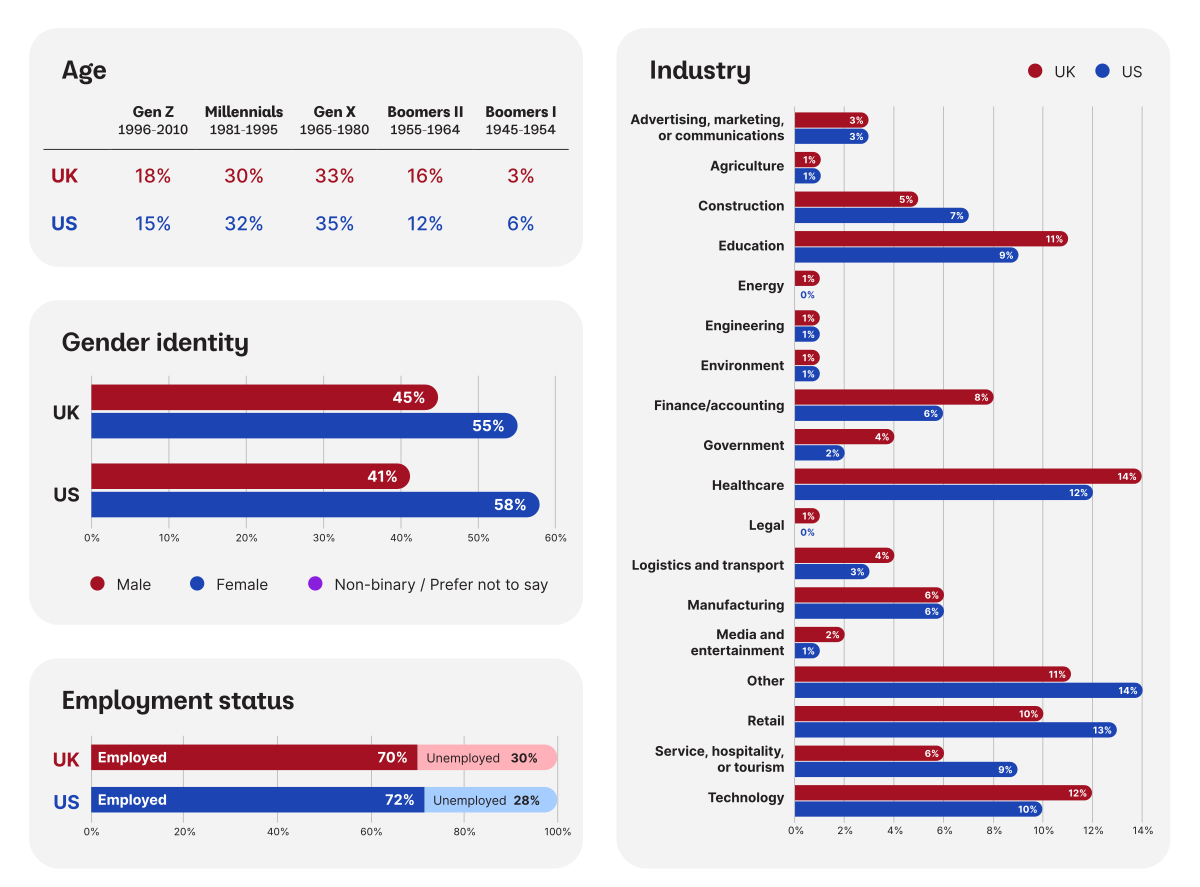
This report is underpinned by extensive research conducted through the Cint Exchange, the world’s largest marketplace for research, and was conducted in association with Advertising Week Europe.
In late January and early February 2026, around 1000 respondents in both the United Kingdom and the United States took part in our study into AI.
A demographic overview is at below.
Is AI really changing how we work?
Assessing the new 9-5
We’d guarantee that nearly every person reading this report has, to some extent, felt the impact of AI on their working lives; whether that impact is positive or negative depends on the individual, their organization, and their industry.
In a recent interview with the Financial Times, Microsoft AI chief executive Mustafa Suleyman made the startling claim that the world of work will be radically different in 2027 and beyond.
“So white-collar work, where you’re sitting down at a computer, either being a lawyer or an accountant or a project manager or a marketing person — most of those tasks will be fully automated by an AI within the next 12 to 18 months,” Suleyman said.
His view is shared by many of the senior execs at tech firms across the globe, but how does the average worker feel about an AI-driven future?

Is AI easing the daily grind?
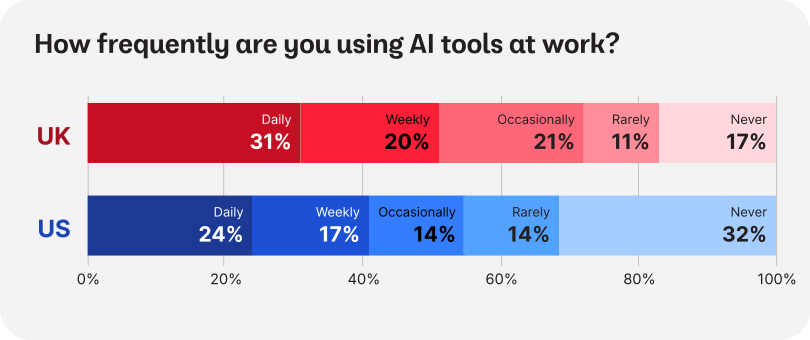
In news that might shock the Suleyman’s and Sam Altman’s of this world, our research shows that nearly a third of the workforce are currently surviving just fine without AI in their working lives. AI might dominate headlines — and online conversations — but it hasn’t necessarily entirely migrated to the workplace just yet.
That being said, we still see that just under a quarter of those surveyed have integrated AI usage into their daily workflow in the US and just under a third in the UK, with a further 20% of Brits and 17% of US respondents making use of AI tools on a weekly basis.
Looking at the polarities (the daily users and the never-use-it cohort) we might surmise that AI is still in search of a middle-ground when it comes to being fully enmeshed in the world of work.
Increased productivity is often heralded as one of the trump cards of AI integration in the workplace.
Generative AI can help with automating the tedious, time-consuming tasks that drain our productivity, freeing us to focus on more meaningful work. Reducing the time spent on post-meeting notes, for instance, allows us to pivot immediately to executing the actual action items.
That’s the theory, anyway.
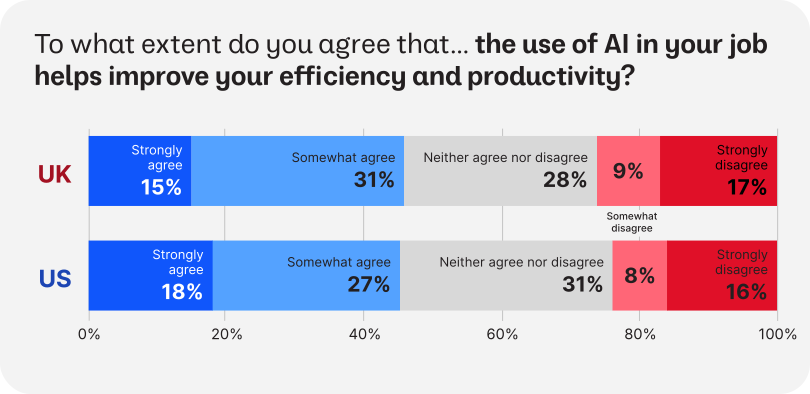
Was this rhetoric shared by our survey respondents? Broadly speaking, yes. Both respondent groups are more likely to somewhat or strongly agree with the proposition that using AI at work improves their productivity and efficiency.
In the UK, this combined figure sits at 46%, and in the US it represents 45% of the workforce we surveyed. Contrastingly, just 26% of Brits and 24% of Americans somewhat or strongly disagreed with the statement.
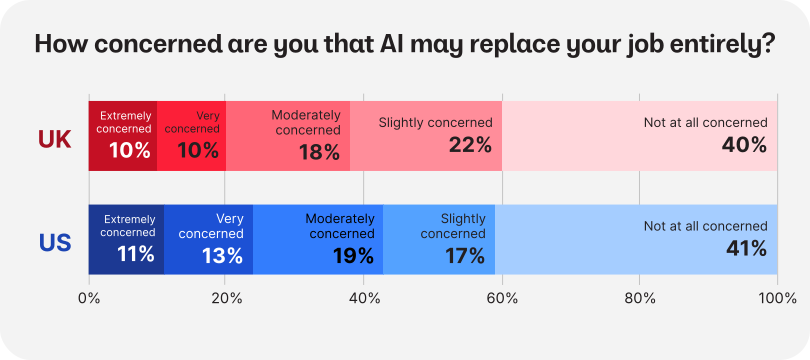
Given the statements made by the likes of Microsoft’s Mustafa Suleyman, it made sense to ask our respondents a simple, direct question: How concerned are you that AI may replace your job entirely?
As with much of the data our research unearthed, sentiments are nearly identical across survey takers in the UK and the US.
One fifth of UK respondents and nearly a quarter of those surveyed in the US reported feeling extremely or very concerned about increased AI adoption having a detrimental effect on their future employment prospects.
On the other hand, we also see that around 40% of both respondent groups currently have no concerns whatsoever about their jobs being replaced by AI solutions.
How are we actually using AI at work?
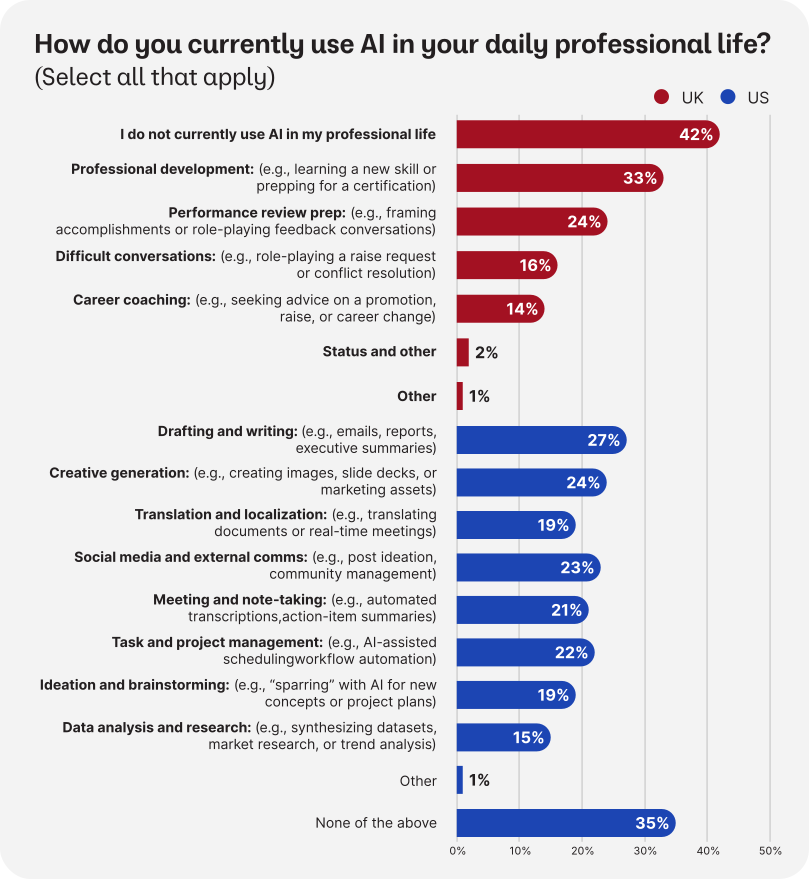
In the UK, AI seems to be playing the role of a career coach. Our research shows that while a sizeable 42% of respondents do not currently use AI in any professional capacity, exactly one third make use of it for their professional development (which may include learning new skills or preparing for additional workplace certifications) and a further 24% have utilized AI solutions in order to get themselves ready for performance reviews.
Respondents in the US were presented with a slightly different set of options to choose from. What we saw here was that while the narrative around AI in the workplace tends to focus on the potentially transformative power it has for management and staff alike, there is still a striking 35% of the workforce who are not integrating it into their routines, processes, and workflows.
For those who have, drafting and writing (i.e. using generative tools to assist with putting emails, reports, or executive summaries together), creative generation (e.g. prettifying decks or other visual assets together using AI solutions) and task/project management (such as AI-assisted scheduling or using automated processes for specific workflows) prove to be relevant use cases.
Accuracy vs ethics
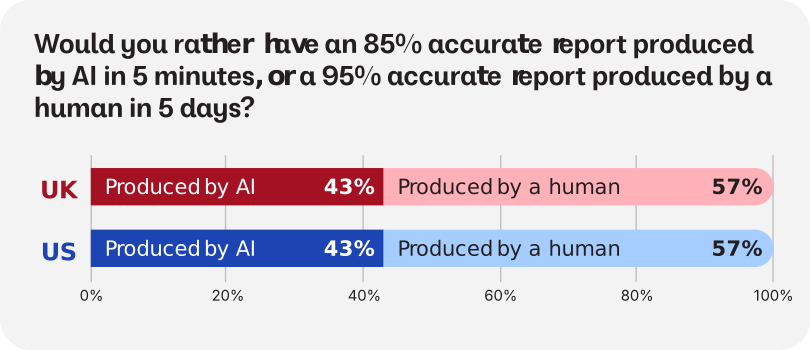
We’ve all been there. You’re in the middle of a busy period at work and another report request lands in your inbox. You have a choice: do it ‘the right way’ or the fast way. For many of us, that’s where tools like ChatGPT come in handy.
The thing is, generative AI systems aren’t perfect; just like actual humans, they can make mistakes. As such, that choice usually boils down to a trade-off between speed and certainty.
Our data shows that most professionals still lean toward the latter. While the majority (57%) would opt to spend an entire working week on a report, a not insignificant minority (43%) seem willing to trade a degree of accuracy for the speediness offered by AI-generated solutions.
Authority, adoption, and excitement
Meaningful changes in workplace dynamics tend to be led by senior leadership. AI adoption is no different. Without clear, company-wide directives issued from the C-suite, internal adoption can find itself stalling as employees remain hesitant to deviate from their established processes and practices.
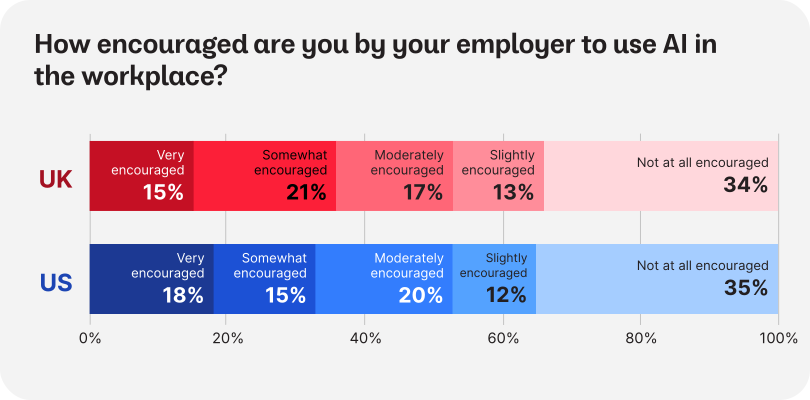
Despite the hype, our results show that around a third of those surveyed are currently receiving little in the way of strong encouragement to go all in on AI.
That said, 36% of respondents in the UK are being very or somewhat encouraged to slot Gemini and other generative solutions into their working lives, and this figure lies at 33% in the US.
This potentially indicates that AI may remain an underutilized tool rather than actually being the driver of institutional efficiency that some claim it is.
The introduction of new processes in the workplace necessitates new policies and practices if organizations and industries want those processes to flow down to staff.
In the absence of any clear and rigorous frameworks, employees can find themselves having to navigate both the ethical and operational complexities of using AI in a vacuum. This poses potential significant liabilities around things like data security.
Employees need to know if they can, for example, enter potentially sensitive information into an LLM without risking repercussions or reputational damage. What might seem like a simple prompt inputted to save time and effort on the part of an employee may have consequences for their employer.
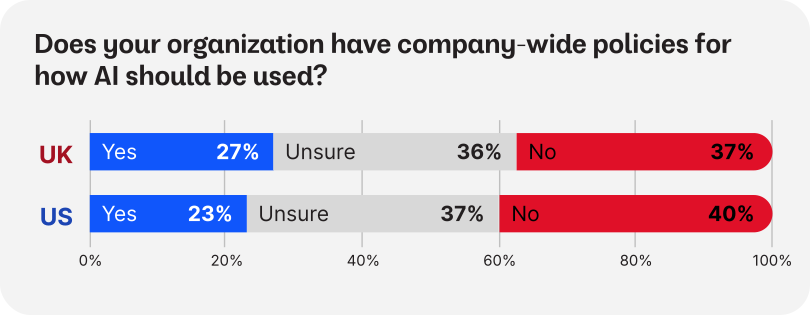
Accordingly, we wanted to explore what percentage of our respondent groups are currently equipped with robust, company-wide policies for how AI should be used.
The results of our research show that roughly only around a quarter of respondents (27% in the UK and 23% in the US) are confident that their current employer has devised and deployed AI policies, compared with 40% in the US and 37% in the UK who have no such frameworks in place.
Our data reveals a critical gap in corporate governance: approximately 40% of the workforce in both the UK and US are unable to confirm the existence of formal AI guidelines in their place of work.
Changing how you work isn’t the easiest of tasks, and as such, it might not be the most enticing possibility in the world. If you’re used to one set of interlocked processes, the idea of having to start from scratch can be daunting.
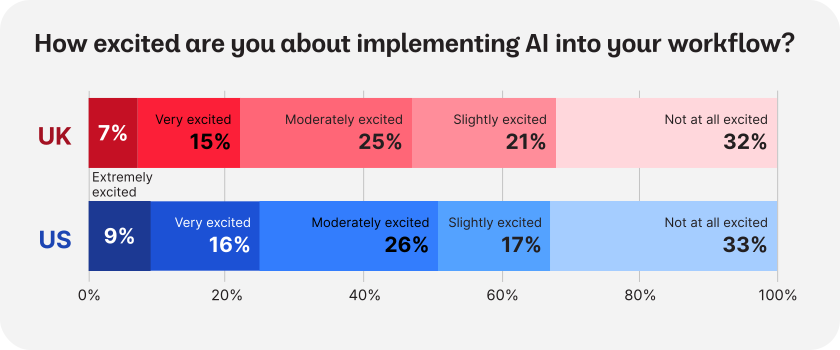
As such, we wanted to explore just how excited people are when it comes to implementing AI into their workflows.
Instead of a groundswell of excitement — which we might expect if we’re to believe the people who sit at the top of the AI ladder — our research shows a “wait-and-see” middle and a sizable amount of resistance.
Only 7% of UK and 9% of US respondents express high levels of excitement regarding AI integration, a figure dwarfed by the 32% and 33% who are not at all enthusiastic about its adoption.
Recap and conclusion
While the decade so far has been characterized by seismic political, societal, and environmental shifts, the impact that AI is having on our lives might be considered as a more intimate form of overhaul and revolution. These are changes that’re unfolding at our desks and on our sofas, in our inboxes, and on our social media feeds.
The research we’ve conducted in the first few months of 2026 suggest that while AI has definitely escaped the tech-bro bubble, it is yet to achieve the status of being an essential tool for respondents at work or in their free time.
Life
Beyond the office and the ad break, generative AI may well continue to quietly embed itself into our domestic and personal spheres.
That being said, while many of our surveyed respondents are happy to let AI suggest recipes, they’re much more hesitant to let it have a say over the major milestones of their lives.
LLMs might be a handy alternative to Google searches, and they may come in useful for nudging us in the right direction of an affordable hotel on the Amalfi coast, when it comes to the things that really matter, the human element remains non-negotiable.
Advertising
When it comes to advertising, our research highlights the fact that while consumers may be fascinated by AI’s capabilities on this front, they remain protective of transparency around usage, and not entirely sure yet when it comes to the relationship between AI and brand perception rates.
We found also that over half of consumers across both territories harbor some level of concern regarding AI’s role in the advertisements they consume.
Work
The workplace remains the primary battleground for AI adoption in 2026 and beyond. While industry leaders may be predicting a radical automation of white-collar work, our findings suggest that we’re very much in a transitory phase when it comes to total adoption and acceptance of automation.
Our results demonstrate a notable gap between the potential for AI-driven productivity and the actual daily reality of the average worker. For those who do use AI, the results are broadly positive regarding output, but tensions arise when it comes to choosing between the quality of one’s work and the speed with which it can be done.
Read more in the series
Download full report