
Contents
Categories
Taking a collective approach to concentrating on quality
Data quality is the central pillar of the entire research ecosystem and consistent good data quality is only achievable when collective efforts are made. A recent webinar hosted by the Market Research Society (MRS) presented the result of organizations making a concerted and collective effort to work collaboratively to optimize data quality and minimize the harmful effects of fraud across the industry.
Taking place in late January 2026, the discussion focused on a newly devised ‘feedback loop’ that aims to give the research industry a framework for sharing standardized feedback on issues pertaining to data quality and a means of categorizing exactly why respondents may be removed from survey data.
This feedback loop — which was created thanks to MRS’ existing Global Data Quality (GDQ) initiative — is a means of engendering transparent conversations within a complex ecosystem.
Cint is a proud participant in this initiative, leveraging its expertise and processes to help shape the codeframe, and contributing to a pilot with sample data.

Cint is a proud participant in this initiative, leveraging its expertise and processes to help shape the codeframe, and contributing to a pilot with sample data.
Cint’s role in the pilot was being the platform that Cobalt Sky used to collect data for a project. Cobalt Sky then attempted to scrub that data and append reasons from the codeframe, going on to provide feedback based on their experience.
Cint also created an example of how suppliers may use the code frame: submission > storage > action.
The GDQ webinar showcased the power of collective thinking where MRS’ Debrah Harding was joined by Joanna Price (Kantar), Rebecca Cole (Cobalt Sky), Bob Fawson (Data Quality Co-Op) and Rachel Alltmont (Samplecon) to discuss the feedback loop.
Speaking the same language
The MRS webinar introduced attendees — and the wider industry — to a ‘Code Frame’ that acts as the foundation of a shared language for discussing issues related to data quality in modern market research.
That code frame outlines 18 reasons why a respondent may find themselves removed from a study for quality reasons, giving market research professionals a common vocabulary for identifying specific reversal and reconciliation reasons.
It covers everything from explicit trap questions (defined as ‘failure at a question designed to check whether participants are paying attention’) to speeding (‘completing a questionnaire faster than reasonably expected’).
The code frame is available online, and all the definitions refer back to the wider GDQ glossary.
What are the benefits of having a shared vocabulary for buyers and suppliers?
Supplier benefits of adopting the code frame include:
- Standardized reasons for reversals enable buyers to provide quantifiable feedback on every reversal.
- The facilitation of enhanced decision-making processes when it comes to assessing respondent and sub-source quality.
- Supporting open conversations between buyers and suppliers when it comes to concerns around reversal and reconciliation reasons.
For buyers, the GDQ feedback loop and code frame provide:
- A thorough framework for assessing the presence of issues pertaining to data quality.
- A better and deeper understanding of survey design issues that may be contributing to poor data quality.
- More confidence when it comes to making objective judgements on reversals.
Taken collectively, organizations — like Cint — who feed into and work with the GDQ feedback loop can look forward to greater transparency and clarity, a swifter resolution of data quality issues, and strengthened trust between buyers and suppliers.
“Reversals have often felt like a black box to suppliers who need insights to diagnose issues with supply and deploy the appropriate remedies,” says Shelby Downes, Senior Program Manager at Cint. “Buyers and suppliers should be excited for a framework that promotes transparency around reversals and can trigger conversations which lead to meaningful improvements in quality.”
“Buyers and suppliers should be excited for a framework that promotes transparency around reversals and can trigger conversations which lead to meaningful improvements in quality.”

Shelby Downes
Senior Program Manager, Cint
Cint’s approach to quality feedback loops
At Cint, we’ve established our own foundation for transparency through the creation and implementation of feedback loops which ensure we maintain a healthy and accountable data collection ecosystem where participants are rewarded fairly, and there is consistent monitoring of the quality issues buyers face.
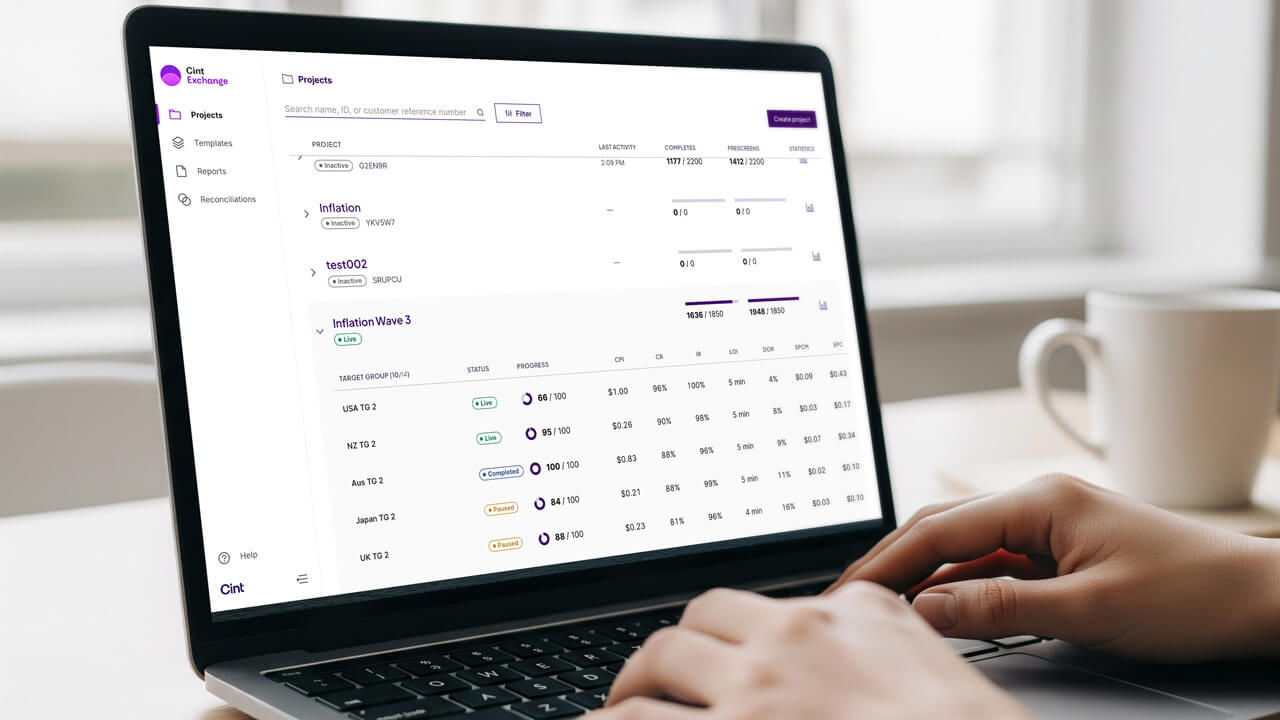
Within the Cint Exchange, we provide customers with a reconciliation process that allows buyers to remove completes that do not meet quality standards.
All buyers operating within our marketplace have a responsibility to submit their own reversals and every response that is reversed should be associated with a reversal reason.
Reversal reasons range from ghost completes (which is when a complete for a respondent has been registered but there is no evidence of that specific respondent in the buyer survey) to speeding (where a respondent’s length of interview (LOI) was outside of the reasonable LOI for the survey) and auditing of this kind helps improve the health of the Cint Exchange.
Like the wider GDQ proposal, it is a reconciliation policy that relies on a collective effort: Buyer reconciliations inform both Cint and our suppliers, enabling us to identify new fraud trends and take action to protect buyers.
The policy is underpinned by a range of tech solutions and programs to ensure its success:
- Platform Tracking – ensures users have full visibility of which completes are eligible for reconciliation, enabling buyers to review and process reconciliations quickly.
- Automated Monitoring – an automated protocol that enforces Cint’s reconciliation policy. It assesses reconciliations for potential mishaps, such as over-removals, and checks the validity of the reasons.
- Human Validation – the automated system is backed by an operational program, where a team of specialists is on hand to conduct manual investigations where needed.
“Cint’s reconciliation policy provides us with data that is essential for the success of our operational programs designed to improve both buyer and supplier quality,” says Downes. “These insights mean we hit the ground running when diagnosing issues and identifying solutions.
Read more about Cint’s ongoing commitment to quality
Head over to our Quality page to get the lowdown on how we pair advanced tech with dedicated teams to fight data fraud and deliver high-quality consumer insights.
You can also check out more of our quality-related content by making your way to our Quality Hub right now.