
From fragmented data to intelligent insights
As the needs and wants of consumers shift, ascertaining a deeper understanding of what drives them matters more than ever, and reaching the right people has become increasingly critical.
Across industries, and across the globe, researchers, leaders, and founders alike are increasingly determined to unpack the ‘who’ and ‘why’ behind the data gathered as part of market research studies.
Organizations that are looking to make confident business decisions backed by reliable data can often find themselves in a bind: Their need for insights at scale may lead to situations where they’re having to manage a fragmented patchwork of multiple vendors or suppliers, and this accounts for additional expenditure of time and money.
That’s frustrating when what they’re after is intelligent insights.
“Before starting to work with us, one organization was working with 20 different global suppliers,” notes Ben Hogg, Managing Director at Cint. “By finding us and thus the Cint Exchange, they no longer need to work with 20 different suppliers to get 20 different quotes, project setups, invoices, and project managers. The breadth of our exchange allows them to consolidate everything into one streamlined workflow”.
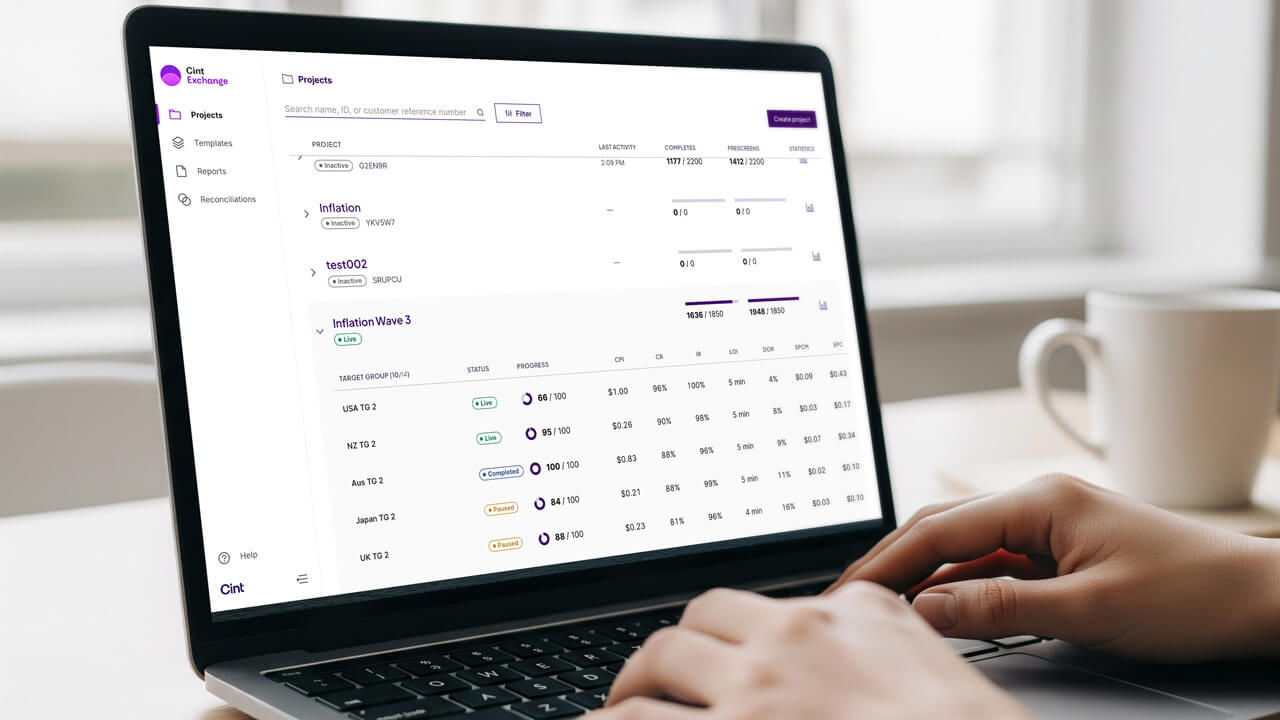
The Cint Exchange is the world’s largest network of verified human survey respondents. Cint is directly integrated with over 800 supply partners, representing over 4500 panels, making it easy to programmatically connect with the right people, anywhere in the world.
Bridging the divide with AI-moderated interviews
A new methodology has emerged to help close the scalability gap: AI-Moderated Interviews (AIMIs). While the industry has been quick to adopt increasingly sophisticated automated solutions for age-old market research problems, AIMIs are particularly interesting as they represent a shift toward high-fidelity, mixed-model data collection that meets respondents where they are.

AIMIs are particularly interesting as they represent a shift toward high-fidelity, mixed-model data collection that meets respondents where they are.
Studies of this kind provide seamless and simple means of providing organizations in need of qualified respondents with the ability to reach the right people, with the survey responses provided in video, audio, and text formats, at the scale and speed of traditional quantitative methodologies.
Like any emergent technology, AIMI studies have their skeptics, with some wondering whether AI can truly replicate the human touch that we’ve come to associate with market research. On this point, Hogg is keen to stress that the rise of AIMIs does not equal the end of traditional qualitative research. “At Cint, our focus is on how we enable our customers to succeed using these new tools.”
The Cint advantage: Quality supply at scale
The success of an AIMI study hinges on a factor that many providers struggle to secure: a consistent, high-quality supply of respondents who are actively willing to engage via video, audio, and text interviews. This is where the Cint Exchange provides a foundational advantage.
VP, Global Business Development, Graham Wall, identifies this as the primary differentiator. “Quality supply at scale is what customers need, and despite some respondents being unwilling to go on camera, the sheer size of our network means that Cint is much more likely to find those respondents who do than anyone else.”
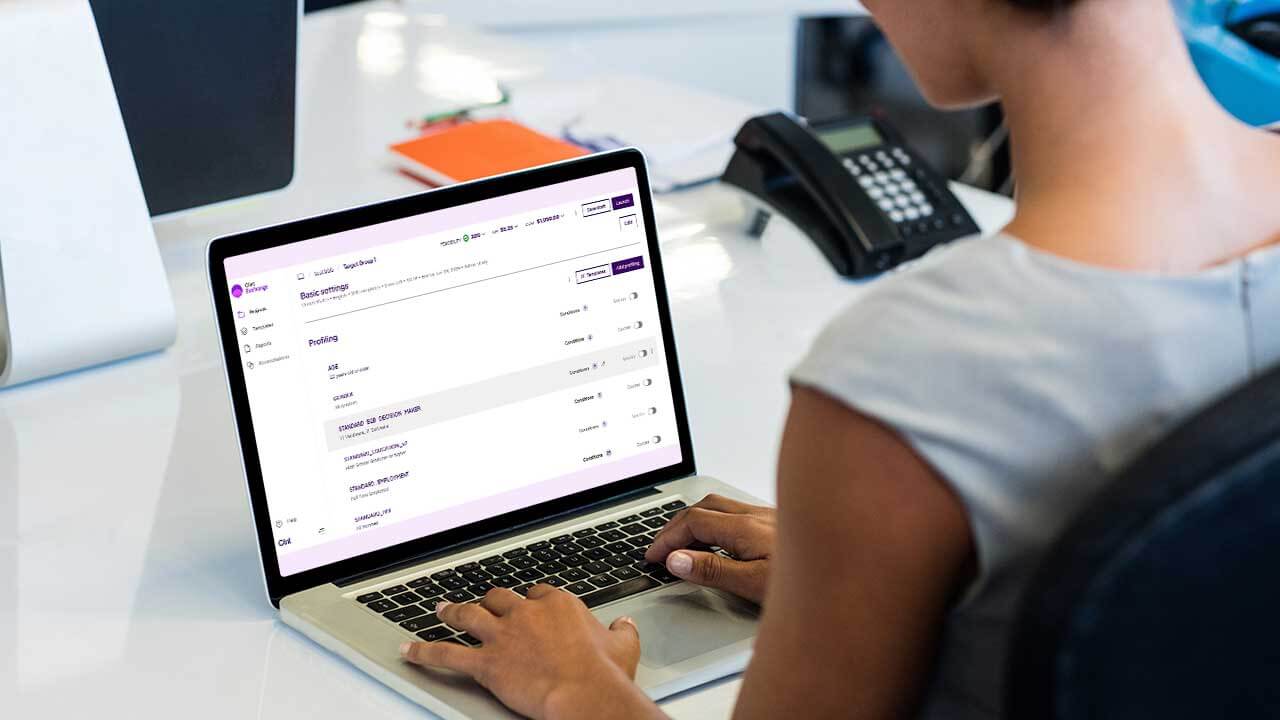
In this context, scale is a tool for precision, not just raw numbers. “We typically have over 200 profiling points in each market, including specific filters for people willing to use video and audio,” says Wall. “When you go niche with other providers, you run out of respondents. With us, you can get down to a really granular level without hitting a wall.”
“We typically have over 200 profiling points in each market, including specific filters for people willing to use video and audio,” says Wall. “When you go niche with other providers, you run out of respondents. With us, you can get down to a really granular level without hitting a wall.”

Graham Wall
VP, Global Business Development, Cint
Enhancing the respondent experience
One of the more surprising findings emerging from the AIMI space is that interacting with an AI moderator (as opposed to an actual human interviewer) may encourage more honesty from respondents when it comes to answering survey questions.
“When it comes to more sensitive topics, people often feel more comfortable being honest and vulnerable with an AI-moderated interviewer than being in a room with a human who might be judging them,” explains Hogg. “You are more likely to get the honest truth when the respondent doesn’t feel a social pressure to perform.”
Additionally, the flexibility of the technology allows for a “mixed-model” approach that respects the respondent’s environment.
Wall highlights the power of adaptability: “We are seeing providers offer text, video, and audio depending on what is suitable for that respondent at that moment. If someone is commuting, it switches to text. If they are at home, they can use audio. If the video quality is poor, the system can suggest finishing the conversation over chat. This is powerful for the respondent experience because it doesn’t result in a lost cause just because a webcam isn’t working”.
That adaptability is crucial for the continued importance and relevance of reliable market research in an increasingly unpredictable world: without respondents, there’s no data, and without data, there are no insights.
Establishing a foundation of truth
Regardless of how sophisticated the AI becomes, both Hogg and Wall agree that the technology is only as good as the human sample powering it.
“High-quality human sample remains the foundation of research, even as new technologies and methodologies come into play,” says Wall.
By leveraging hundreds of profiling points and a network that reaches across the globe, Cint provides the infrastructure necessary to make AIMIs a viable part of any research toolkit. We provide the stability that allows researchers to be bold with new methodologies.
Get in touch today
Ready to start scaling conversational insights and having access to data that gives your organization the edge it needs to move faster and make confident business decisions?