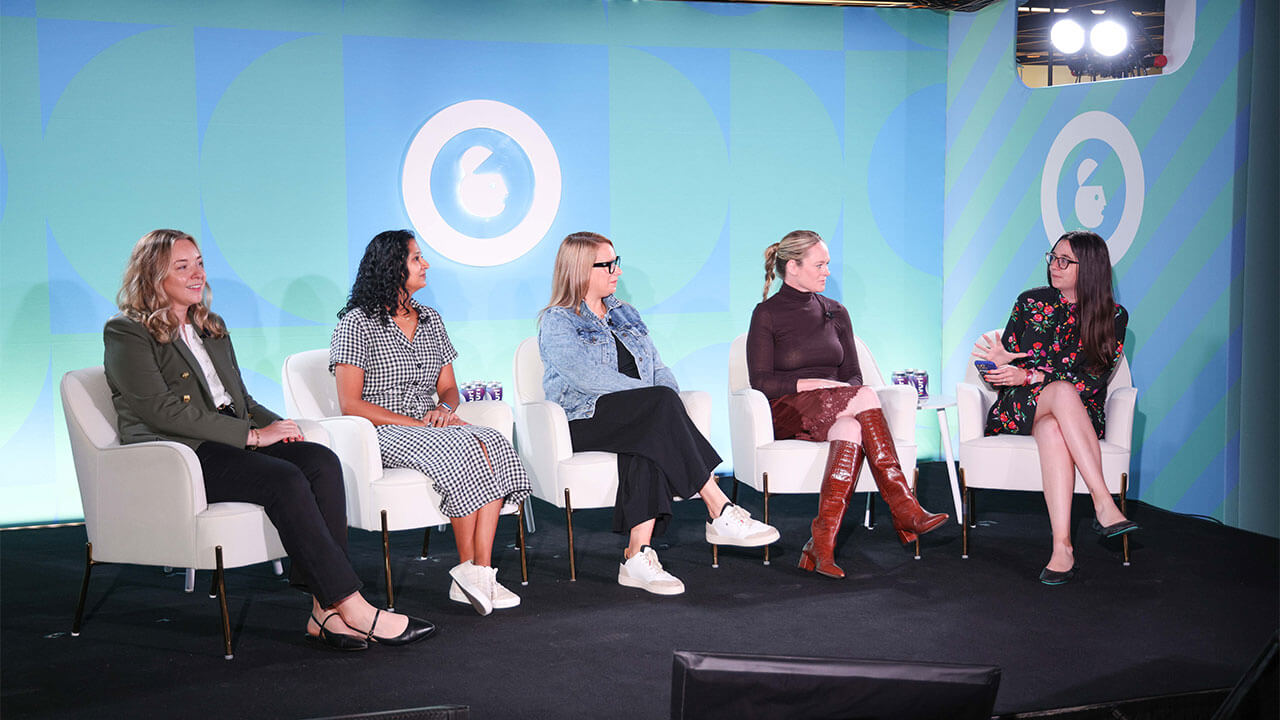
Moderated by Adweek’s Delaney Strittmatter, “One Size Fits None: Rethinking Campaign Measurement for Global Brands” saw Cint’s Chris Pope (Senior Director of Data and Measurement) joined by Director of Analytics and Insights at WPP Media, Anna Lee for a discussion that explored how to best align your regional goals into one cohesive, data-backed story.
“You might be in a situation where your clients operate in 20 different markets,” said Strittmatter by way of introduction. “Your North American team and your EMEA team are telling different stories, and you’re the one left defending the discrepancies.”
For agencies that manage global clients, it can be difficult to navigate pressures to reconcile competing sets of regional data, and brands are likely to be looking for insights on how to better gauge their agency’s impact.
If you weren’t able to attend the webinar, he’s a recap of what went down.
Avoiding the ‘one-size-fits-all’ situation
Anyone working in the advertising industry will be more than aware of just how fragmented, complicated, and difficult to navigate the day-to-day has become. While having a standardized approach to campaign measurement can simplify things, it doesn’t necessarily lead to actual success.
With that in mind, Pope began the session by asking Lee what success looks like in the 21st century for brands operating on a global scale and why the traditional US-centric measurement playbook might not always translate across other markets.
“Especially for a global brand where their home base is in the US, it’s very easy for us to get stuck in that “one-size-fits-all” situation. But usually, with each of the regions coming online, the leads have their own interpretation, as well as what they want to measure as a KPI or OKR,” said Lee.
“The challenges I’ve run into managing a global brand involve a misalignment between internal clients and our regional teams regarding which KPI they consider to be success, because each of these markets has different maturity when it comes to the brand,” said Lee. “For example, our US market is much more mature compared to a market that might be just coming online. While we may focus on something a little more down-funnel or mid-funnel, like consideration, these other regions are battling headwinds to build brand trust and brand awareness.”
For Lee, this is compounded by the fact that each region and market is defined by their own cultural moments and seasonal events — facets of life that aren’t always shared.
A holiday or high-demand period in the US might look different elsewhere, and, accordingly, what a US advertiser may think of as a low period could actually be the peak in another part of the world. The way around this, Lee suggests, is to listen to and learn from local experts.
Finding the right audience at the right time
This led Pope to ask Lee: how do these global challenges actually factor into your planning process and determine where your investments should go?
At WPP, the focus is on timing, channels, and budgetary availability. Each of their clients have set budgets for each region, and WPP has to work within those parameters. Above all, the question remains: what are we trying to solve for?
“For regions where we would need broad awareness, it’s easy for us to lean towards OTT or linear TV or any channel that has broad and massive reach, but truly, is that the best use of our dollars? That’s where the strategy team and researchers come in,” said Lee. “We know that for some of these platforms, addressing that audience is not as accurate, but it does have that massive reach. Is the creative message tailored for that? Is it going to land, knowing that it is difficult to truly address that interest or that audience there?”
Crucially, you have to make sure you’re actively seeking out the right audience for any given campaign, on the right channel, at the right time.
Navigating toward a North Star
As someone running campaigns for a global brand and leveraging measurement to gather insights that can ultimately lead you to tell that data-backed story, how does Lee put together that cohesive story when dealing with different goals from different regions?
“For our clients, we have our reporting structure where there’s a global rollout where we will touch on a global North Star,” said Lee. “At the regional level, the regional teams will also walk through the results with the regional stakeholders and address those KPIs. That’s how it would all ladder up at the end of the day for the overall global business. Depending on who the audience is, having that global North Star really is what’s going to help define the story for you.”
“For our clients, we have our reporting structure where there’s a global rollout where we will touch on a global North Star. Depending on who the audience is, having that global North Star really is what’s going to help define the story for you.”
Anna Lee Director of Analytics and Insights, WPP Media
Once that pivotal North Star has been agreed upon, Lee and the team at WPP will work with their clients on the specific wording of the questions they want answered.
There is a meticulous process for each of the regions to take that question—which usually is in English—and translate it into local contexts so that way there’s no introduction of bias.
“We also standardize our measurement framework to what we consider to be a gold, silver, and bronze standard in terms of deterministic exposure,” Lee said.
For example, the gold standard is to ensure that an exposure is tracked deterministically, whether through tags or through a server-to-server connection,” said Lee. “But in some regions where it’s a little bit more stringent because of privacy laws, we will settle for a broad standard, which is like a self-reported opportunity-to-see, especially if it’s a high investment.”
Pope took the opportunity to expound on what makes Cint stand out on this front.
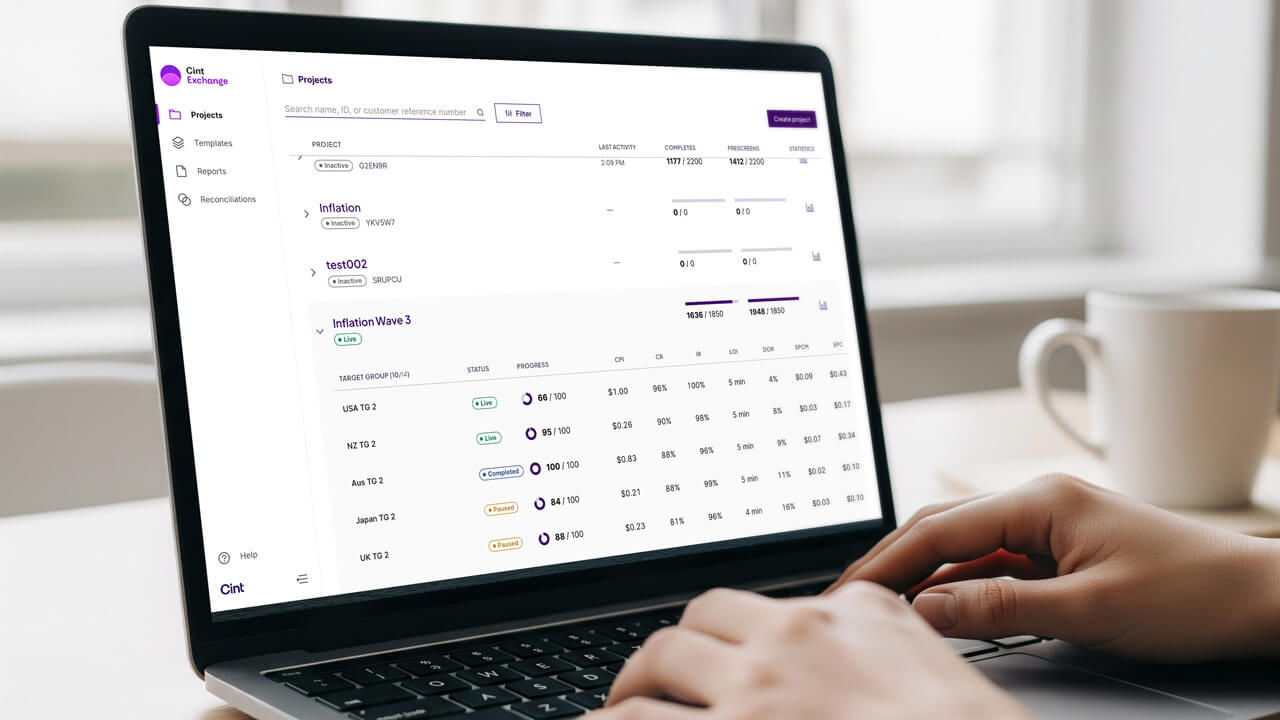
“The part of the Cint tech stack that lends itself well to that speed of insights is our impact measurement dashboard. This allows agencies to get real-time insights across all the KPIs and channels they’re measuring—from digital to linear—for all the geographies they may be operating in.”
Adapting to an ever-changing world
In 2026, the only constant is change. Whether it’s a sudden shift in privacy laws in the EU or a geopolitical event that disrupts travel in Asia, global brands must be able to pivot their media spend without breaking their measurement models.
As Pope put it, “I’ve seen how the best-laid plans can get changed at times, but how do you build agility into that initial campaign setup so that a pivot in the campaign doesn’t necessarily break the measurement?”
From Lee’s perspective, it really depends on what the impact of the media is. If there’s a slight reduction in spend, the study may continue, but with a change of sample size. If it’s a complete reduction in media spend, that forces companies like WPP to potentially relaunch the measurement, as it could introduce bias into the control room.
“It really depends on the methodology of each of the studies. I have had to do both and had to pivot pretty quickly. It’s about being nimble and knowing the methodology of your partner and your study,” said Lee.
“Working with a partner to have a robust time series is also helpful. I’ve had partners who are able to do that as well; Cint does that, especially within your impact measurement platform. Having the best tech stack and a partner who can report back with a time series will definitely help minimize the impact that events would have.”
Thinking about the future
“Not all channels have perfect measurement, and not all vendors cover them in the deterministic way that we prefer,” said Lee. “The top thing for me is to increase that channel coverage and reporting efficiency. I want to have everything in one dashboard so we’re able to give a holistic read.”
AI and automation will continue to play a massive role in measurement in 2027 — and beyond. On this front, Lee stated that, “For me, it’s about further refining how to responsibly use the tool effectively and efficiently to quickly analyze data and provide exceptional client service.”
“ROI is something that we’re working on heavily here at Cint, We’re about being able to tie that brand lift to some of the down-funnel metrics that clients are interested in. We’re definitely working on helping brands ‘close that loop,’ so to speak.”
Chris Pope Senior Director of Data and Measurement, Cint
Ultimately, though, everything will come down to the ongoing effort to prove how brand lift ties to ROI, driving profit for the company.
“ROI is something that we’re working on heavily here at Cint,” said Pope. “We’re about being able to tie that brand lift to some of the down-funnel metrics that clients are interested in. We’re definitely working on helping brands “close that loop,” so to speak.”
Discover how MCP enables marketing teams to query real-time brand lift, performance metrics, and campaign outcomes through simple natural language prompts.
As AI fraud rings threaten market research, validated synthetic data offers a defense. Discover how to protect data integrity from automated deception and preserve trust.
Understand what first-party data is, why it’s crucial for a modern data strategy, and how you can effectively collect, manage, and enrich it for insights.
Get the low down on what Cint CEO Patrick Comer and VP of Trust and Safety Jimmy Snyder had to say about combating fraud while protecting the respondent experience.
Learn how to calculate and measure ad recall, brand awareness, consideration, message association, and brand attribute lift to optimize your ad campaigns.
Learn how reliable, accurate survey data leads to stronger decision-making, better targeting, and optimized resource allocation for effective insights.
Cint’s Wilson Peters (VP, Global Customer Success) and Delineate’s James ‘JT’ Turner (Founder and CEO) discuss the importance of research when it comes to connecting with consumers.
Explore how survey design, inclusive language, and community engagement can help us create research that reflects the full diversity of human experience.
Director of Product Management at Cint, Stephanie Gall, joined the EMARKETER podcast to discuss how to make better campaign decisions in periods of flux.
Feeling the pinch but still need to deliver? A panel of experts headed by Cint’s Laura Manning discuss strategic approaches to media measurement during a period of flux.