
Contents
Categories
Can the research industry maintain human truth at machine velocity?
As budgets tighten and AI accelerates product cycles, the insights industry faces a crisis: evolve or be bypassed. Advances like digital twins and synthetic personas may offer the modern researcher additional speed and scale, but they also risk automating bias if trained on flawed data.
The question is, can the research industry maintain human truth at machine velocity?
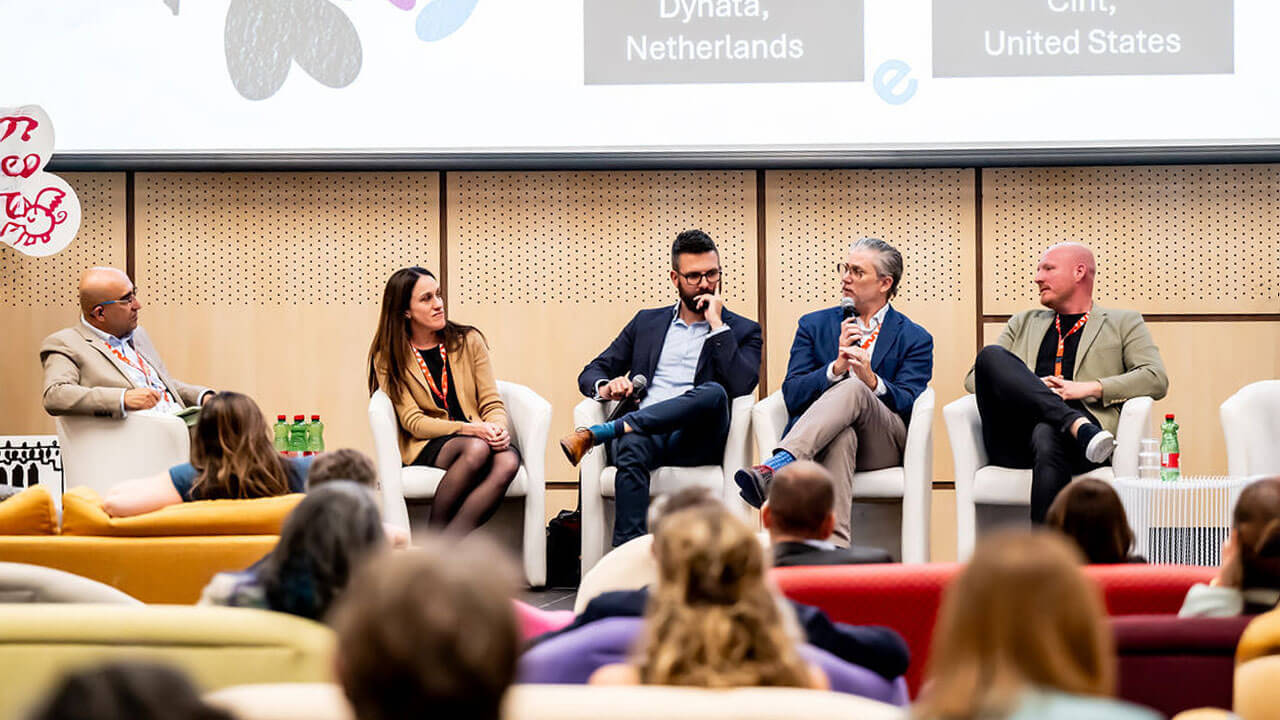
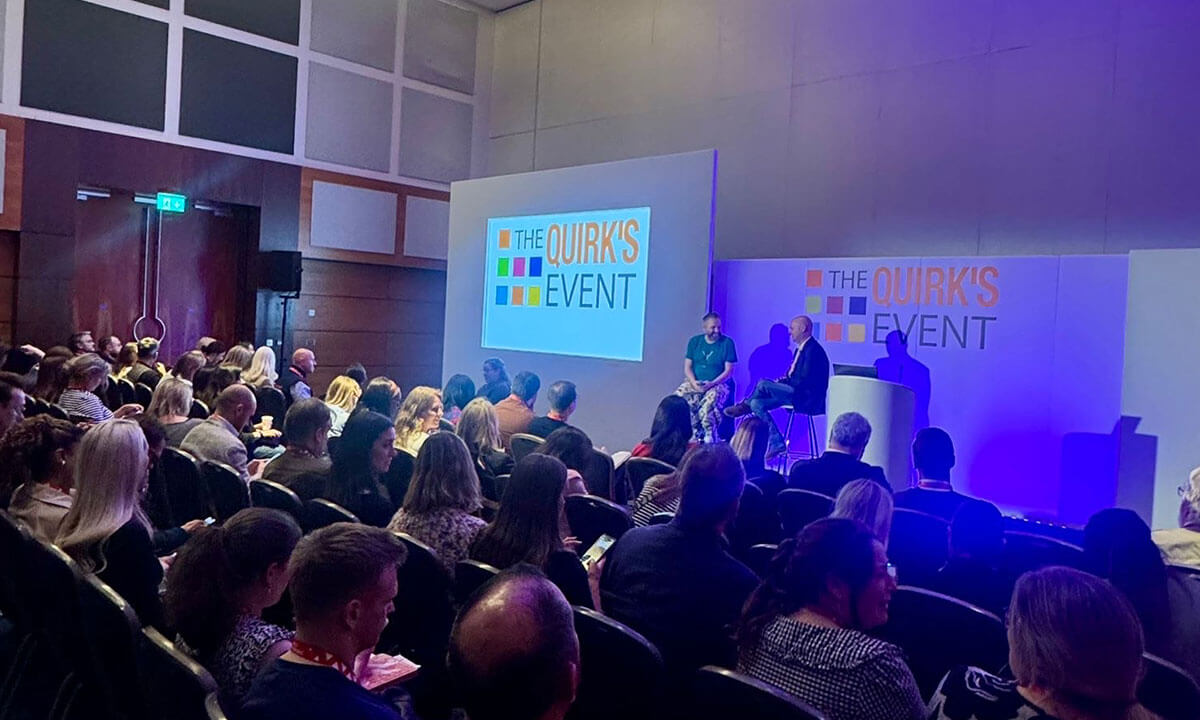
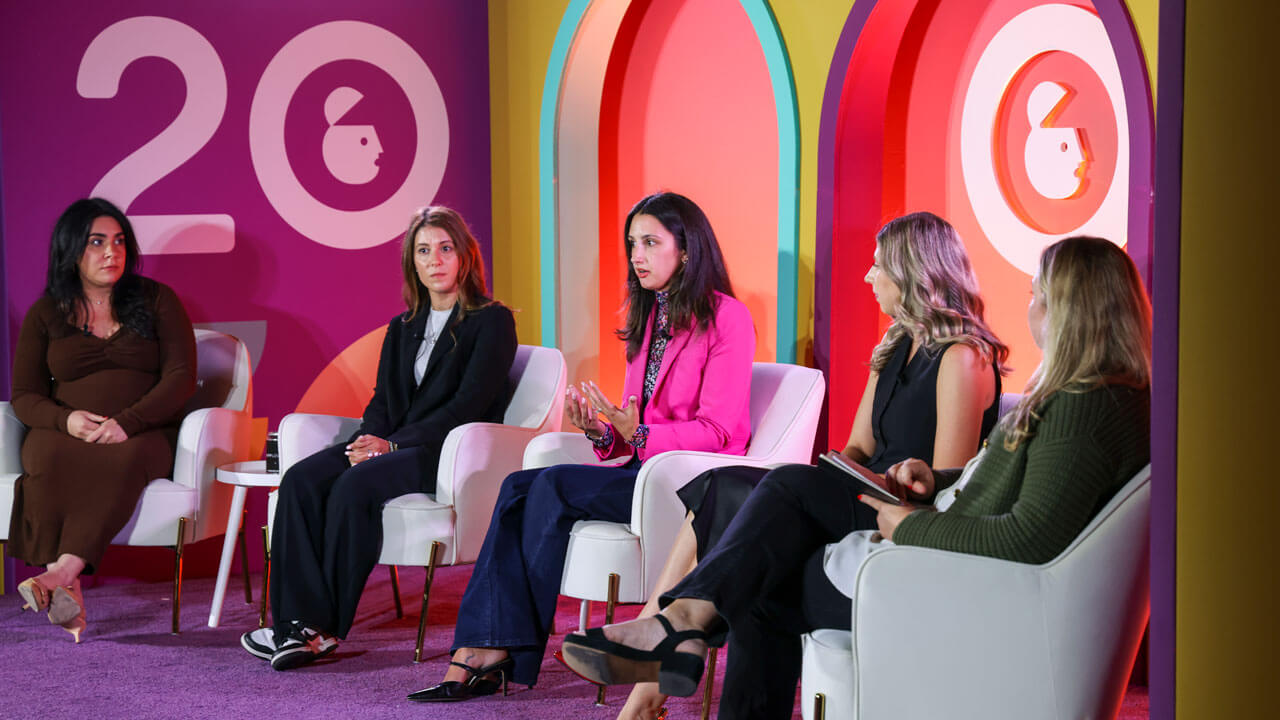
This was the topic of a recent panel discussion, led by Phil Ahad (Managing Director, Data at Cint) at IIEX North America.
Ahad was joined on stage by Nero Aziz (Head of Innovation at Savanta), Kevin Daly (CEO of Collage Group) and brand insights leader Adam Hussein.
Is it time to embrace hybrid research methods?
The premise for the discussion was to unpack what’s working, what’s not, and how to embrace change so that market research and consumer insights remain part of the decision-making process.
Aziz shared his perspective by detailing a three-year long pilot of Savanta’s virtual persona product. While adoption of the product has been solid, Aziz and his team have noticed both skepticism around synthetic personas and confusion around what they actually are and how they are actually defined.
“There have been interesting questions around the level of granularity by which you decide to model your audience,” he said. “Are your personas representing segments? Are they representing individuals or units? These are all very interesting questions that have arisen as a result of the product going to market.”
Daly highlighted that as AI tools proliferate in market research and media measurement, the next challenge is quality control. He envisions a future of “tools to help use the tools,” providing necessary guardrails to ensure data integrity. This approach allows researchers to combine human intuition with automated performance management.
Ultimately, the panel agreed that embracing hybrid capabilities is no longer optional if insights teams want to stay agile in a real-time world and ensure that research plays a pivotal role in decision-making.
How are hybrid research methods impacting data collection and insights gathering?
Reflecting on his 15 years in the industry, Ahad noted that, “This is the first time where actually we’re not dealing with a huge technology curve to adopt: we’re dealing with a behavioral issue to adopt.”
With that in mind, Ahad asked the panel about the changes the industry might have to make when it comes to collecting data and creating answers.
“Trust is at the core of what we do in market research,” said Hussein. “We have to trust that we’re representing the voice of the customer accurately and fairly, whether it’s through synthetic personas, live customer interviews, or ethnographic studies.”
“Trust is at the core of what we do in market research, we have to trust that we’re representing the voice of the customer accurately and fairly, whether it’s through synthetic personas, live customer interviews, or ethnographic studies.”

Adam Hussien
Brand insights leader
He continued. “The main thing is that we have to trust that what we’re doing is representative of the larger voice of the customer. So it’s about proving out that value, demonstrating that we can really extend what we’re doing here in this new era to show without losing that critical customer representation.”
In Aziz’s eyes, there’s a lingering question over how synthetic products are used and what is being done to validate them.
“You can evaluate the solution against its ability to recall data that you trained it on, or its ability to predict,” he said, “but how do you validate something that you haven’t actually gone out and queried?”
He argued that things like synthetic personas are predictive tools. “At the end of the day, you’re going to need to go out there into the market and test them out, whether it’s against your clients or running some sort of survey or interview against them.”
Daly’s response honed in on a different facet. For him, one of the biggest behavioral shifts for staff working insights roles comes in the form of a change from episodic to continuous inputs.
“In the old method, you had these projects, and you’d have a briefing, and you’d work on these projects, and you’d have a meeting and a debrief, and it was very episodic,” he said. AI workflows, and advanced technology like synthetic personas, is changing all of that.
“You don’t just have a data feed, but an actual insight feed. Human curation is the important role that the insight professionals provide, but you can do that really quickly and more continuously now. We’re able to get more insights embedded into more business flows across our organization — they’re in every campaign brief, every product brief, every sales deck.”

What are the concerns around adopting hybrid research methods?
To round off the discussion, Ahad asked a big question. Were the panelists, he wondered, seeing any pushback at all from clients when it comes to adopting a hybrid, mixed-model approach to data collection?
In Daly’s view, one of the biggest challenges in adopting a hybrid research model is an emotional one rather than a technical difficulty.
“There’s a concern that something like an individual’s identity or their beliefs are far harder to predict than the kind of deodorant they buy, for example.”
To overcome this, Daly advocated for the increased implementation of guardrails. For the Collage Group, this means providing total transparency. By allowing users to view AI-generated cultural briefs side-by-side with the raw data points that informed them (which limits inputs to specific, high-impact variables) researchers can verify the through line for themselves. It’s about using technology to prevent erroneous conclusions, giving teams the confidence to move forward.
“We’ve dealt with clients who care very much about the sort of situation of individual respondents and how that impacts their decision-making or their opinion on X or Y,” added Aziz.
“Modeling a situation is very different; that’s very difficult data to get. This is not something that you can easily sort of capture data for, but it’s something that you can model and potentially validate in live experiments. When it comes to actually building these virtual personas, we anchor them primarily on these psychographic and behavioral traits.”
Connect with Cint
Want to know more about how you can unlock additional value from your research data in the age of hybrid modelling?