
Contents
- How to check audience feasibility before launching a study
- What is a feasibility study?
- Six steps to check audience feasibility before launching your study
- 1. Define project scope, goals, and budget
- 2. Narrow down your target audience
- 3. Expand your market research
- 4. Conduct financial analysis
- 5. Consider operational feasibility
- 6. Evaluate the risks
- Factors that influence audience feasibility studies
- Why audience feasibility studies matter
- How Cint streamlines feasibility studies
Categories
How to check audience feasibility before launching a study
Launching a survey without thoroughly checking feasibility comes with risks. Before investing time and money, you need to know your research project is viable, practical, and cost-effective. Checking audience feasibility means defining your project scope, narrowing your sample, conducting preliminary research, analyzing costs, and evaluating potential risks before launching fieldwork.
What is a feasibility study?
In market research, a feasibility study is an upfront evaluation that determines whether a proposed survey project is both practical and achievable. Its primary purpose is to test core assumptions around sample availability, field timelines, and overall costs. Running a feasibility study ensures you can reach enough qualified respondents before committing your budget to a specific project or projects.
Six steps to check audience feasibility before launching your study
Validating audience feasibility requires a structured approach. The following six steps will help keep your research on budget, on schedule, and, just as crucially, aligned with your goals.
1. Define project scope, goals, and budget
Before launching fieldwork, establish a clear project blueprint. Defining key parameters upfront prevents scope creep and unexpected expenses mid-fieldwork. Ensure your project plan clearly documents five core components:
- Available budget allocation
- Expected fieldwork timeline
- Purpose and research objectives
- Expected deliverables for stakeholders
- Stakeholders involved or affected by the results
2. Narrow down your target audience
Broad audience criteria lead to high sampling costs and vague insights. Clearly define who you need to survey by outlining demographics such as age, location, income, gender, and specific behaviors. When you refine your target audience, you ensure every survey invitation reaches a qualified respondent.
3. Expand your market research
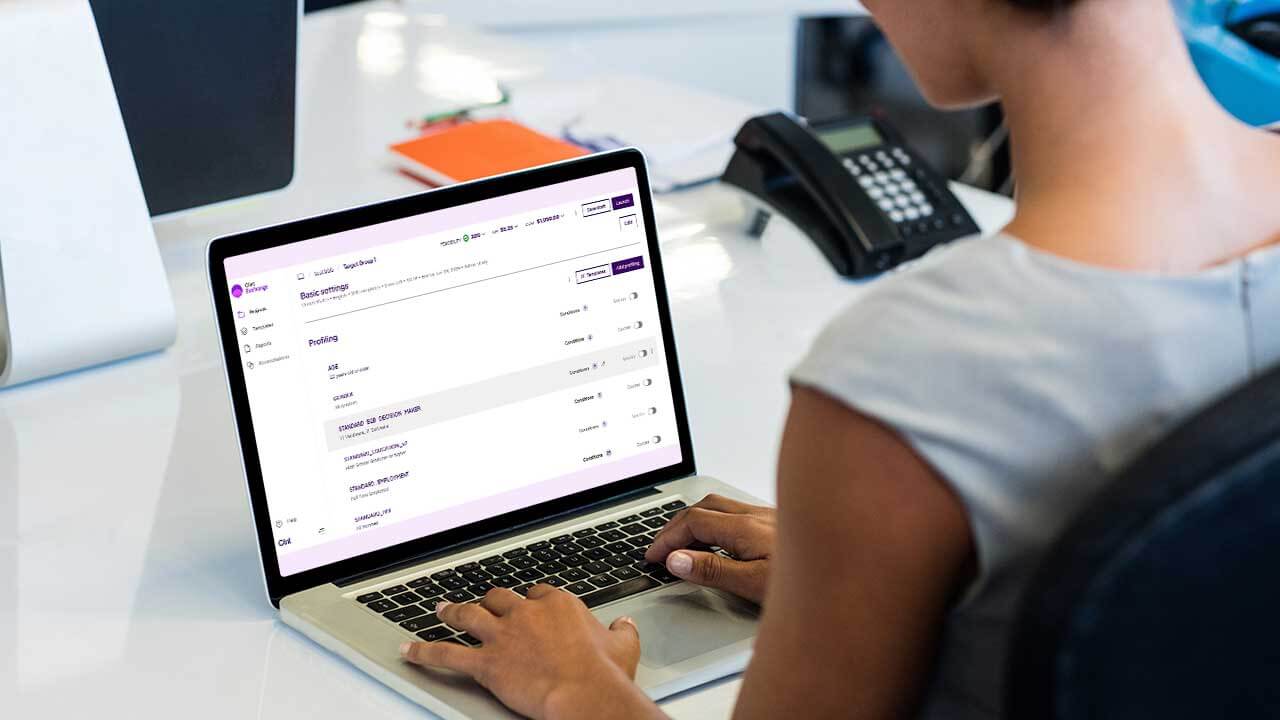
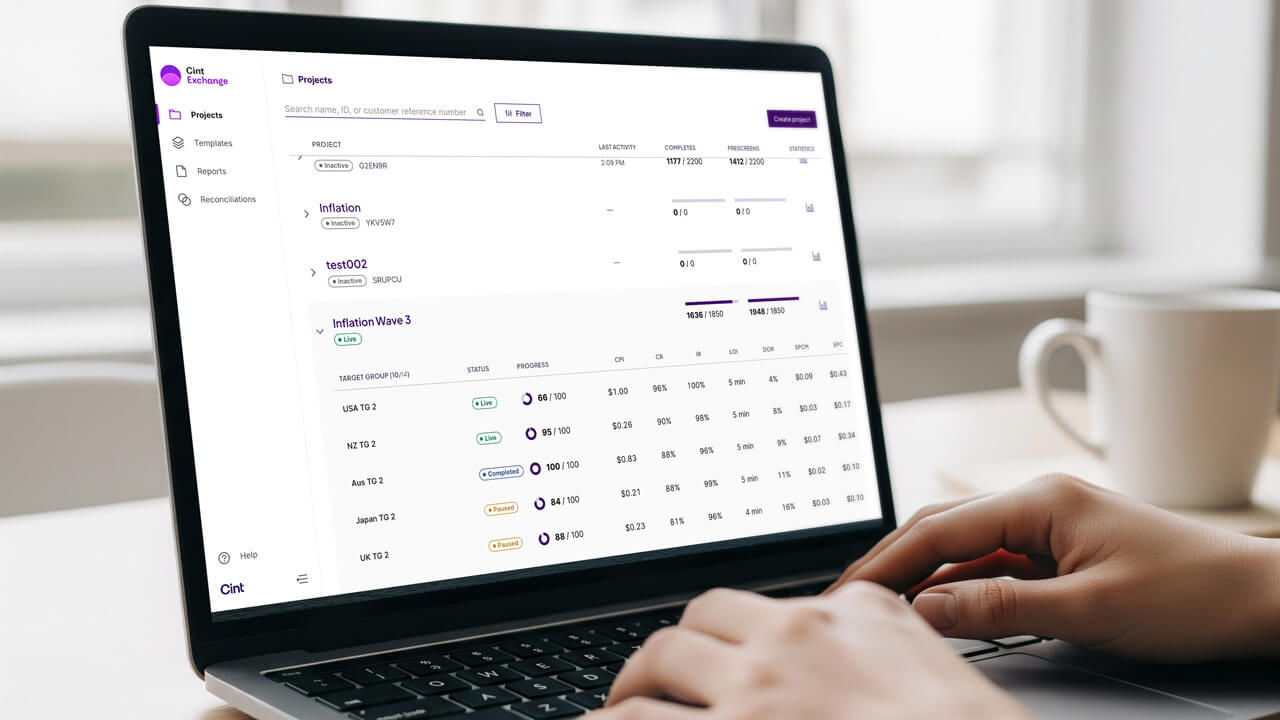
Preliminary research provides critical context before survey design. Explore search data like Google Trends, existing focus groups, social media channels, competitor research, and industry benchmarks. Modern platforms like the Cint Exchange make this step even more reliable. For example, the Cint feasibility tool goes beyond static demographic matches and historical data by applying behavioral modeling to deliver accurate predictions.
4. Conduct financial analysis
Assessing financial feasibility requires weighing fieldwork costs against expected insight value. Calculate operational expenses alongside your estimated Cost Per Interview (CPI). Account for direct ROI as well as intangible benefits like brand reputation or long-term growth. This analysis also clarifies whether external investment is needed.
5. Consider operational feasibility
Evaluate your resource planning, technology requirements, team capacity, and methodology workflows. Documenting operational needs upfront ensures your team can manage data collection smoothly without delivery bottlenecks.
6. Evaluate the risks
A thorough risk assessment helps you spot threats before they disrupt fieldwork. Key risks during feasibility studies include low audience demand, high advertising costs, supply chain shifts, regulatory changes, or new market competitors.
Factors that influence audience feasibility studies
Audience feasibility depends on several moving parts. Core influencing factors include:
- Incidence Rate (IR): The percentage of the target population that qualifies for your study.
- Timeline and seasonality: Holidays, seasonal shifts, or tight schedules that alter response rates.
- Target group niche and sample size: Specific professional roles or rare consumer habits requiring extra sourcing efforts.
- Availability: How accessible your desired respondents are across channels.
- Cost per interview (CPI): Pricing variations based on sample difficulty and panel demand.
Why audience feasibility studies matter
Early feasibility checks yield major benefits across your project lifecycle:
- Reduces risk: Prevents fieldwork stalls and avoids wasting budget on unreachable populations.
- Reassures investors: Provides concrete proof to clients and stakeholders that timelines and budgets are realistic.
- Builds out a realistic roadmap: Establishes clear expectations for delivery, quotas, and field management.
- Validates real demand: Confirms that enough qualified respondents exist to support your research goals.
How Cint streamlines feasibility studies
Manual feasibility checks can be slow and imprecise. The Cint Exchange streamlines this process through sophisticated, automated feasibility forecasting that yields reliable estimates instantly.
The Cint predictive system evaluates key factors automatically, including country and language pairings, target sample size, survey parameters, pricing, timing, profiling quotas, and automation settings.
Research teams can scope projects quickly without guesswork. Boutique agencies and self-service buyers report that this automated clarity reduces under-delivery risk and speeds up client approvals.
Conducting an audience feasibility study is critical for running cost-effective, successful survey projects. By following these steps and leveraging platform automation, you can optimize your research and guarantee accurate results from day one.