
Rethinking qualitative research at scale
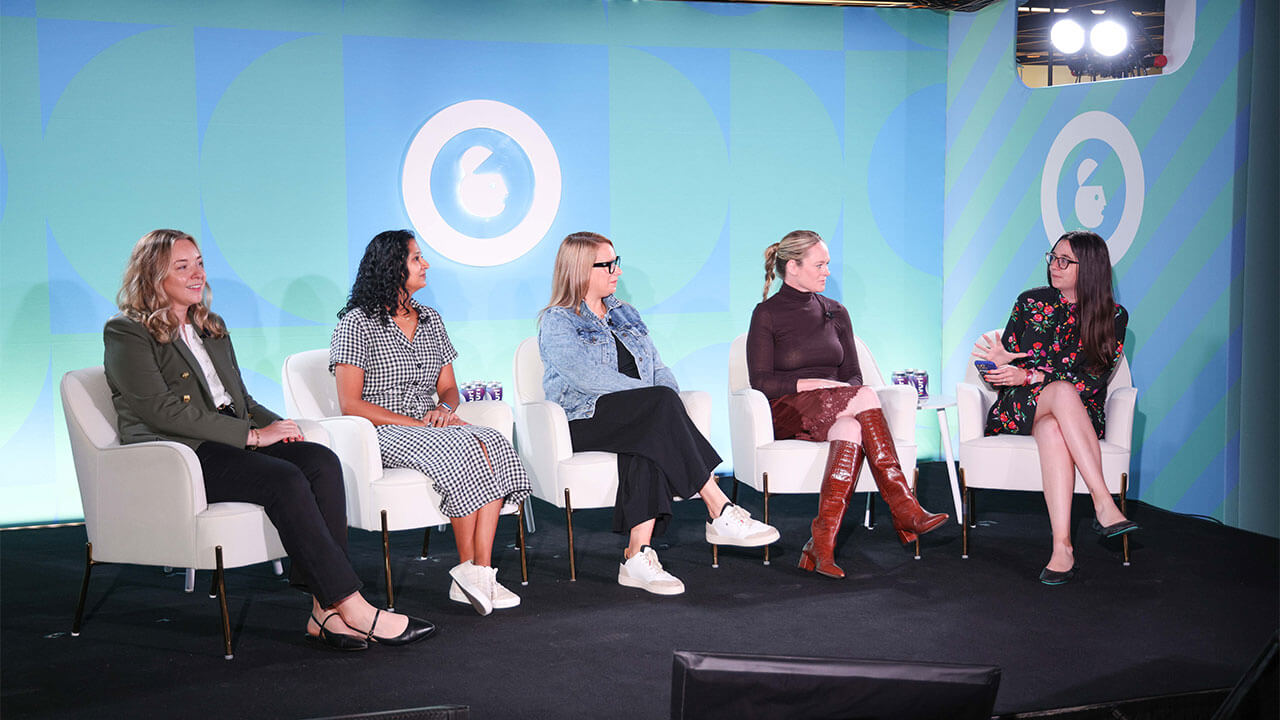
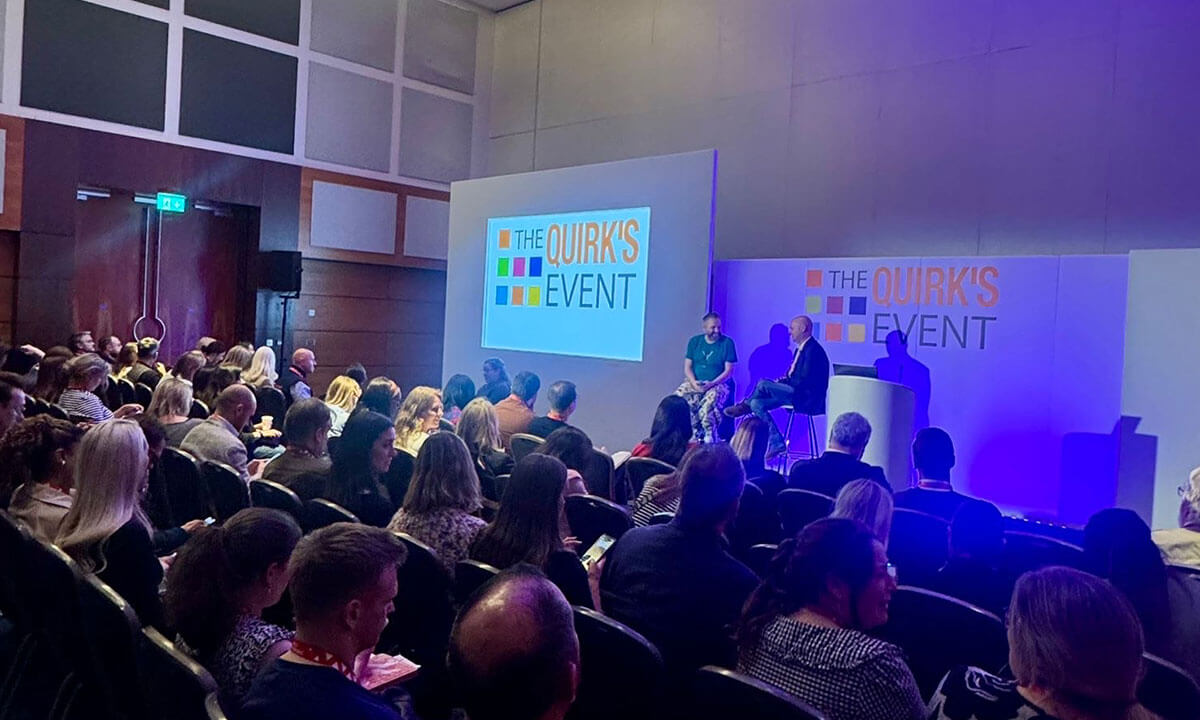
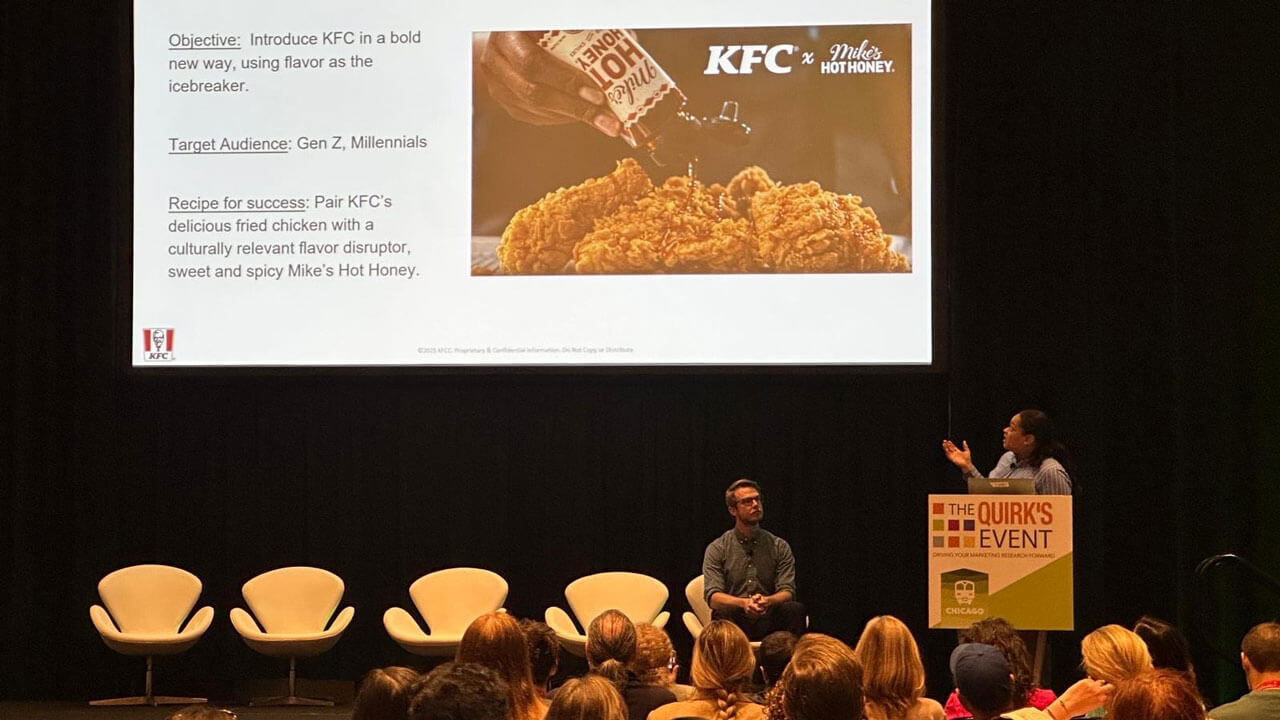
Cint’s Nik Blach (Head of Voice of Customer) recently joined Genevieve Becker (Growth Lead at customer research platform Strella) on stage at TMRE to discuss one of the most critical questions in modern research technology: just how comfortable are respondents when it comes to talking to AI moderators?
As adoption rates of conversational AI tools continue to rise, understanding respondent sentiment is vital for organizations striving to connect with real audiences in an increasingly automated world.
Becker clarified that modern AI moderation goes far beyond traditional, start-and-stop survey forms. “The flavor that you’ll get at Strella is a continuous voice-to-voice conversation between the participant, who is a real human, and an AI agent,” she explained. “It disarms the participant and puts them sort of in a more stream-of-consciousness mindset”.
While AI moderation cannot completely duplicate human qualitative dynamics, it unlocks new possibilities for scaling qualitative depth. Blach, who previously led data research operations at Epic Games, views conversational AI as a natural evolution for survey-based research. “I really see AI moderation as like a super-survey as opposed to an extended qual,” Nick shared. “My superpower that AI cannot take away is knowing that there is a real human on the other side of every data point”.
“I really see AI moderation as like a super-survey as opposed to an extended qual, my superpower that AI cannot take away is knowing that there is a real human on the other side of every data point.”
Nik Blach
Senior Researcher, Voice of Customer and Insights, Cint
Researcher caution versus participant reality
A central theme of the duo’s discussion was the gap between potential researcher skepticism around AIMIs and the actual comfort level of participants. While insights leaders often worry about respondent willingness, the reality on the ground is surprisingly straightforward.
Cint’s research revealed that 76% of US respondents and 73% of UK respondents are willing to take part in AI-moderated interviews. Strella’s recent participant studies similarly showed that between 93% and 98% of respondents reported neutral or positive sentiment toward AI moderation.
Surprisingly, speaking with an AI agent can often lower the pressure participants feel in traditional qualitative interviews. As one study participant put it: “You’re not going to look at me with a stupid answer and judge me or anything… I can just talk. It’s nice”.

76% of US Respondents
73% of UK Respondents
are willing to take part in AI-moderated interviews.
The evolving landscape of AI-moderated interviews
AI-moderated interviewing techniques and solutions are advancing at a rapid pace. Between their initial emergence in 2023 and major enterprise milestones in 2026, the adoption of AIMIs has accelerated alongside ever-evolving market expectations.
As more and more insights teams begin to deploy AI moderators, the objections that some researchers have are shifting. Early on, conversations tended to focus on the perceived comfort levels of participants. Today, concerns are migrating toward concerns around data quality, stakeholder buy-in, and methodological validity.
Experience plays a key role in overcoming hesitation. Strella’s own data indicates that among researchers who initially voiced doubts about participant comfort, roughly 50% reported feeling significantly less concerned after running a pilot interview. Once researchers witness the conversational flow firsthand, their focus turns to integrating the data into broader strategy.
On the data quality front, ensuring sample integrity is paramount. Scaling conversational research requires continuous oversight across the entire respondent journey, from initial screening to session completion.
Blach emphasized that verifying participant readiness is of crucial importance before an AI interview actually begins. Platforms must ensure that respondents have working cameras, clear audio, and the right technical setup so that buyers receive usable, high-value data.
Becker reinforced the notion that combating bad actors requires tight collaboration between sample providers and moderation platforms. “It’s a kind of mutual responsibility of both panel and recruitment as well as the tools themselves to catch the fraud as it comes through,” she explained.
By pairing advanced panel pre-screening with real-time in-session checks, supply partners and tech platforms can ensure that insights remain grounded in authentic human feedback.
Positioning AI moderation in your insights toolkit
AI moderation is not designed to replace every traditional methodology, nor is it meant to render human moderators obsolete. Instead, it serves as a powerful standalone tool in the modern research toolkit.
Compared to open-ended text fields in traditional surveys, AI-moderated conversations yield 3x to 4x the depth of detailed responses. Furthermore, AI moderators offer a neutral, consistent environment free from human observer bias.
When deciding whether to adopt AI moderation, researchers should evaluate study goals rather than participant willingness. When studies require rapid turnaround, flexible scheduling, and objective depth across broad sample sizes, AI moderation provides a scalable, cost-effective path forward. By pairing high-quality sample with intelligent conversational technology, brands can make every decision with confidence.
Learn more about our approach to AIMIs
Are you ready to see how AI-Moderated Interviews can help your team scale conversational insights with confidence?
Get in touch with Cint today to discover more.