Contents
Categories
Navigating consumer trust in the age of AI and creator marketing
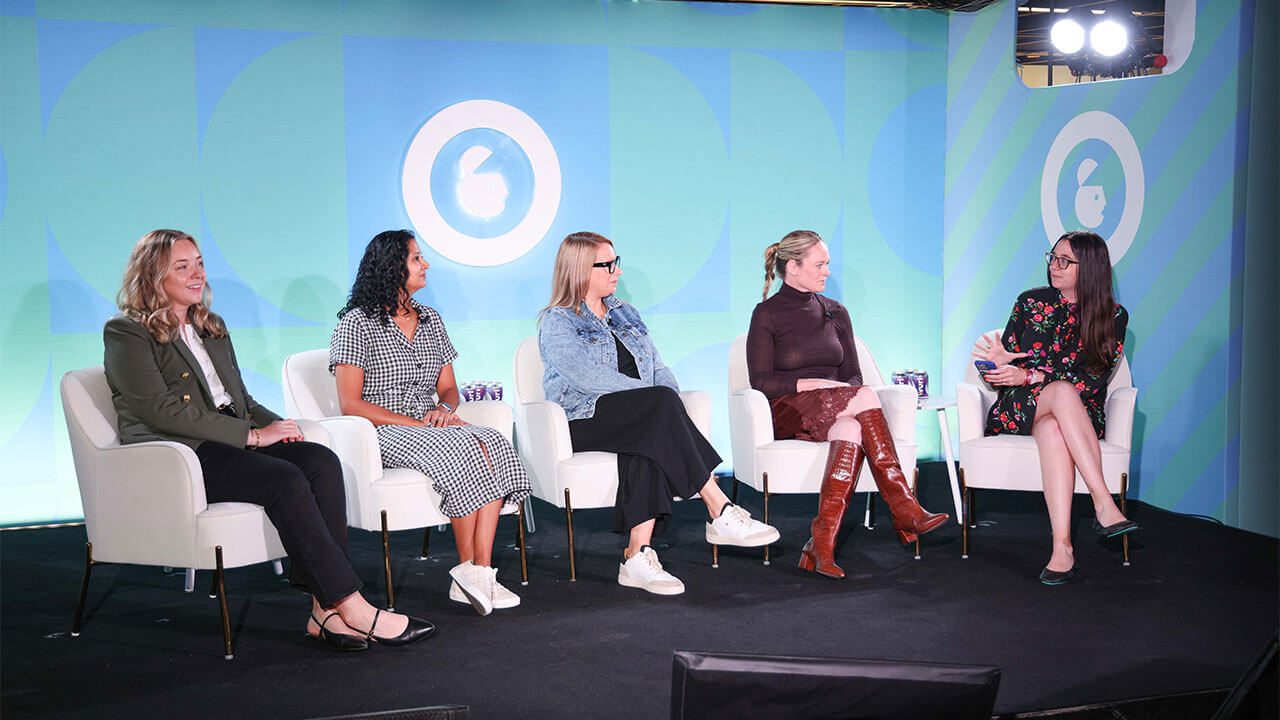
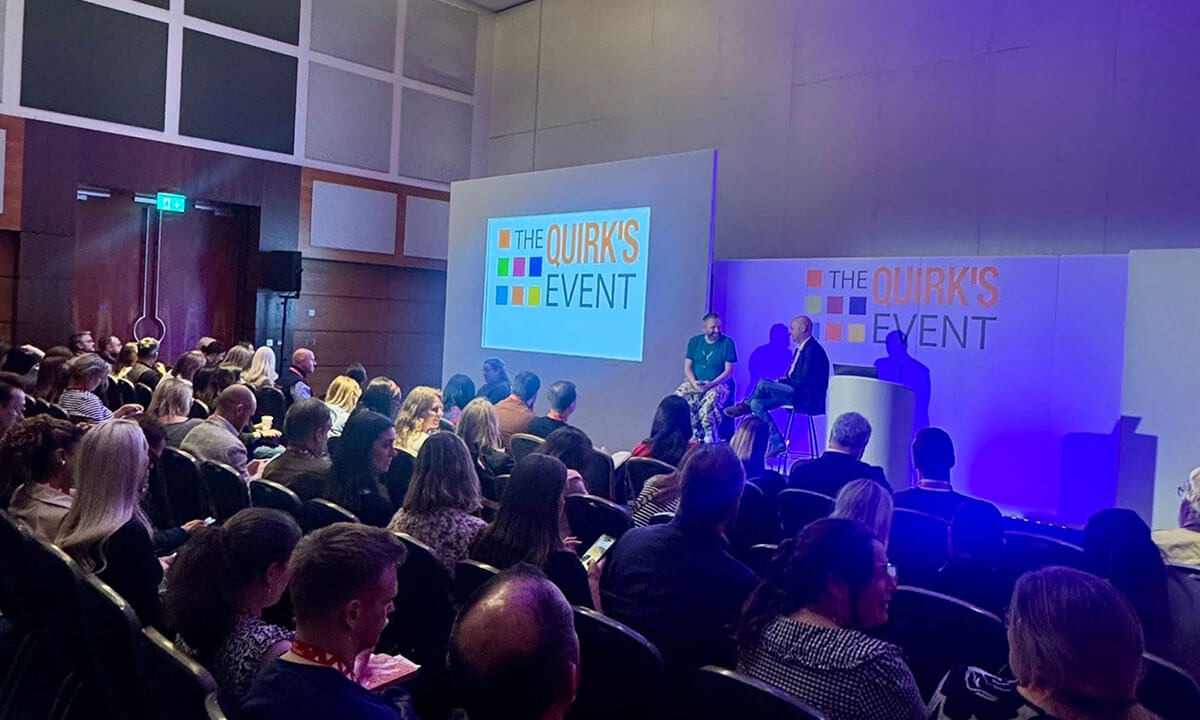
Taking to the stage at Advertising Week New York 2026, Ariel Madway (Director, Brand Experience at Cint) and Katie Ingram (Director of Advertising Week Europe) delivered a session that addressed one of the most pressing questions in the modern marketing landscape: how can brands earn and keep the trust of consumers amidst the rapid rise of AI and creator marketing?
The marketing industry is changing significantly with new voices and new technologies defining every step of a brand’s campaign: from the first strategic kickoff meetings to the final creative output. But one fundamental truth remains unchanged: today’s consumer craves authenticity and trust above all else.
In August 2026, we surveyed 1,000 US respondents to discover what consumers really make of those shifts. What we saw is that while the advertising industry races toward automation and influencer partnerships, everyday consumers are responding with a complex mix of adoption, skepticism, and strict demands for transparency when it comes to disclosing AI assistance in ads.
In this recap, we unpack the core insights, audience discussions, and data points from Madway and Ingram’s joint session.
The modern marketer’s dilemma
Building consumer trust isn’t a brand new topic in media measurement, but the seemingly endless rise of AI in almost every aspect of our lives has pushed it to the forefront.
“I’ve done a lot of panels already this week and a few more to come, and I’m pretty sure we’ve mentioned trust in every single one of them,” noted Ingram. “It’s so high on the agenda at the moment”.
That urgency is directly reflected in consumer behavior. As Madway highlighted on stage, “Today’s consumer craves, pretty much above all else, authenticity and trust, no matter what your creative process is or what media outlets you’re leveraging. This is the table stakes”.
According to Cint and Advertising Week’s research, 93% of consumers state that trusting a brand directly impacts their purchase decisions. In the research world, as Madway added, “that’s pretty much everyone”.
However, the tools that agencies and brand marketers are using to scale their output (and we’re talking here about things like generative AI solutions and creator-led campaigns) are the very same things that can erode consumer trust.
For marketers, the challenge stems from the potential disconnect between industry hype and the lived experience of everyday consumers. Addressing the audience of brand marketers and agency leaders, Ingram observed that “anyone in the industry has got a really different attitude to these things” compared to the consumers actually buying products.
Nowhere is this divide clearer than in major infrastructure investments like WPP’s Devons Point campus, which Ingram highlighted as “an entire building dedicated to generating AI-based content”. Yet that industry excitement has not translated into consumer confidence. As Madway summarized, “We feel like it is the future of the industry in so many ways, and consumers are a little wary back home.”
It’s a reality Ingram reinforced during the session, noting that “the consumer narrative is just clearly not dominated in the same way”.
High usage, high unease?
To understand consumer resistance to AI in advertising, we first need to recognize that audiences are not technophobic: 80% of respondents use AI in their personal lives (with 47% using it weekly), and 66% use it professionally. Yet the exact same proportion—80%—express concern about AI being used to create advertisements. As Madway highlighted, there is a clear “’Yes for me, but not for thee’ mentality happening around the use of AI”.
This consumer hesitation is persistent: identical research we ran across the U.S. and UK in February 2026 returned the exact same 80% concern rate, proving consumer wariness and potential unease isn’t just a passing phase.
When asked how AI-generated ads make them feel, respondents pointed overwhelmingly to negative reactions: untrustworthy, inauthentic, and creepy. “Which is so worrying, right?” Ingram asked on stage. “Untrustworthy and inauthentic are the words marketers most want to avoid, and who wants your ad to be creepy?”
Consumers also voiced concerns over reduced creativity and creative homogenization, a symptom Madway described as the “AI slop of everyone using the same prompt and ending up with the same coffee shop banner.” Just 10% of respondents cited positive associations like “cool” or “innovative”.
Context and visuals dictate tolerance. While nearly half of consumers accept AI ads in low-stakes sectors like travel and beauty, they overwhelmingly reject them in high-stakes fields like healthcare and legal.
Creative execution matters just as much. As Madway summarized, audiences accept synthetic landscapes, but draw the line at AI-generated humans or “anything that has eyes.”
Do brands need to disclose AI use in ads?
The question is, can consumers actually spot synthetic media? Half of the consumers we surveyed are confident in their detection skills, saying they can always spot an AI ad by looking for telltale giveaways like imagery that looks “too perfect,” “cartoonish,” unnatural movement, or “too many ligaments”—with only 26% admitting they cannot tell the difference.
Over a third of respondents say simply knowing AI ads exist lowers their trust in all advertising, while 29% remain perpetually skeptical that any ad is human-made. As Ingram pointed out during a live audience poll, this skepticism leaves brand leaders in a tricky spot: “Are we almost in a place where it doesn’t really matter whether you’re using it or not? If people are assuming you are, you might as well be, because they’re going to assume it anyway”.
That sense of consumer doubt makes upfront transparency around usage imperative. 75% of consumers believe brands have a duty to disclose when AI has been used in an ad. When asked who should be in charge of regulating this, responsibility was split nearly equally: roughly a quarter of respondents placed the onus on the federal government, a quarter on the creative agency, and a quarter on the brand itself.
Interestingly, as Ingram noted, “people aren’t actually holding the platform to account, which is quite different from some of the other conversations we’re having around platform responsibility”.
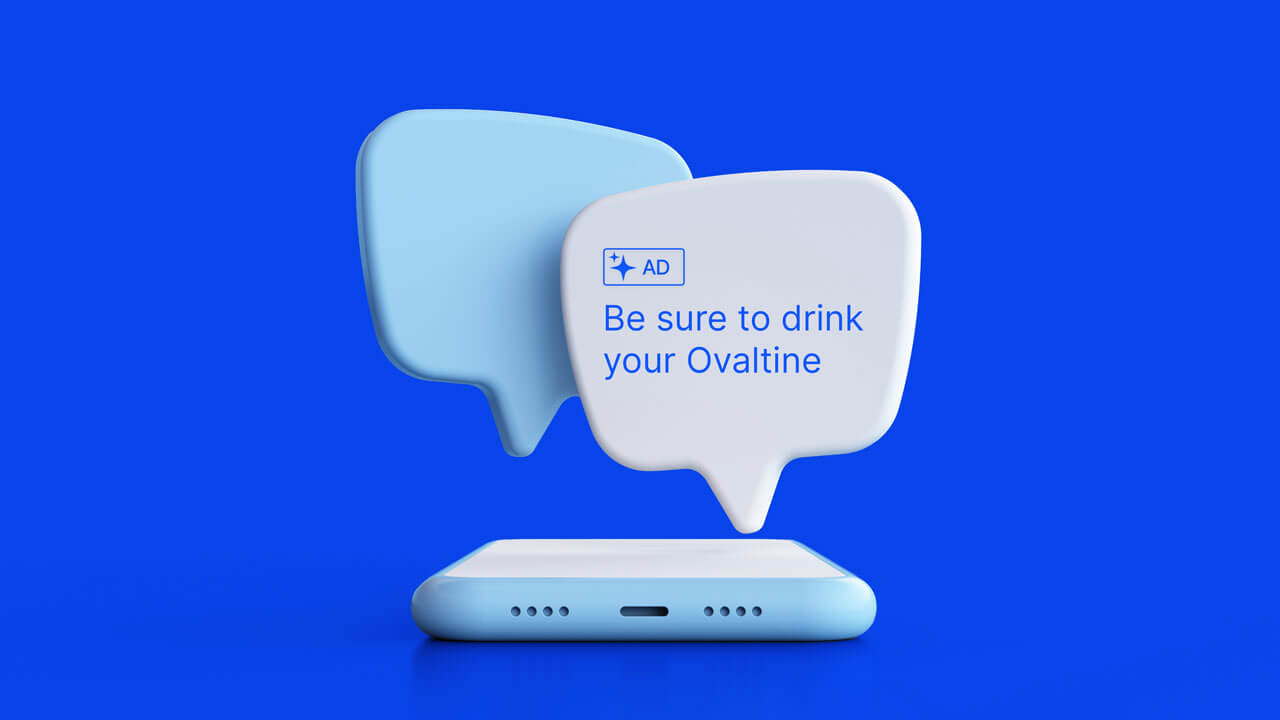
For brand marketers, disclosure can feel like a delicate balancing act. When an ad includes a “Made with Generative AI” label, 40% of consumers appreciate the transparency, while 20% say the tag causes them to automatically decrease their trust and write the brand off.
As Madway explained, that positive response isn’t necessarily an endorsement of the tech, “but they like being told because at the end of the day, consumers don’t like being lied to”. That split led Ingram to empathize with the audience: “And that’s where I feel for marketers, because this is so complicated and it’s really, really hard to win”.
However, as Madway challenged the room: “Is that 20% trust loss worth it compared to not disclosing and potentially being found out?” The research shows that hiding synthetic media is a far more dangerous gamble. Over half of respondents said discovering an undisclosed AI ad would trigger a significant drop in trust.
Highlighting those stakes, Madway revealed that 43% of consumers cited the undisclosed use of AI or synthetic media as the single biggest reason a brand loses their confidence entirely. As Ingram concluded, “If you’re going to take a stat away as a marketer, this is a really important one to take away today, because that is huge when we know how vital trust is”.
Can transparency protects brand reputation in creator partnerships?
While the use of AI-generated or AI-assisted creative in ad campaigns is causing concern among consumers, the ever-burgeoning creator economy presents a major opportunity for brands seeking genuine connection with their audiences.
Over a third of the consumers we surveyed reported preferring influencer promotions over traditional campaigns, citing creator content as more authentic and trustworthy. However, as Ingram warned, that credibility is fragile: “In this world, creator world especially, trust is easily earned, but it’s also very easily lost, and that’s a difficult balance to strike”.
Madway pointed out that three-quarters of consumers believe creators have a duty to disclose paid partnerships using clear language or tags like #ad and #sponsored. Despite long standing guidance from regulatory bodies like the FTC and the ASA, consumer expectations have never been clearer.
The more reassuring news for advertisers is that upfront transparency doesn’t negatively alter campaign performance. Madway highlighted that 46% of consumers appreciate seeing an #ad disclosure and will evaluate the product fairly, 30% take the post with a grain of salt, and just 20% skip sponsored content entirely.
“Which is great news for brands and creators,” Ingram observed. “Nearly half of people are saying, ‘Thank you for being honest, I’m still going to give this a fair hearing’”. The 20% skip rate is comparable to standard ad-skipping behaviors across other media, proving that “being transparent doesn’t kill engagement for the vast majority”.
The potential danger for brands lies in concealment: failing to disclose sponsorships erodes trust in both the creator (39%) and the brand (37%). As Ingram stressed, influencer marketing is a “shared risk” where brands take the hit right alongside creators who cut corners. For advertisers, passive oversight is not an option; as Madway concluded, brands must maintain “clear guardrails and accountability on disclosure, because consumers will hold both parties responsible”.
The marketer’s action plan for authenticity
As the marketing landscape continues to evolve, trust remains the foundation of everything brand leaders are trying to build. Wrapping up their session at Advertising Week, Madway and Ingram offered four key takeaways for navigating this new era:
- Default to transparency: Whether it is AI-generated creative or a paid influencer campaign, consumers demand to know what is behind the messaging. Hiding it is the fastest way to lose them.
- Refine AI visual directives: Context and execution matter immensely. Lean into AI for landscapes, backgrounds, and objects, but steer clear of generating human faces or personified entities, which trigger immediate discomfort.
- Prioritize authentic creator relationships: Partner with creators who genuinely align with your brand’s values, but treat compliance as non-negotiable. Hold creators strictly to disclosure standards to protect your shared reputation.
- Keep consumer trust at the heart of your strategy: With 93% of consumers allowing trust to dictate their purchasing decisions, maintaining that trust is not a secondary metric—it is the core of commercial success.
Read the report in full
Curious to explore the data further? Download The authenticity audit to discover actionable insights on building and protecting brand credibility across AI and creator marketing.